Quotessence
Home / Quotes / Quote by Neil deGrasse Tyson

Quote by Neil deGrasse Tyson

“I wake up and I go to work. I don't look for the cup of coffee. The universe is enough of a draw for me - to awaken me and have me bound out of bed and go to my office.”

Quote by Neil deGrasse Tyson

Author
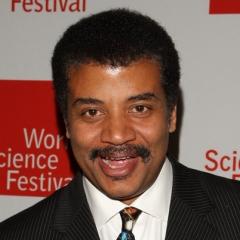
Neil deGrasse Tyson
Neil deGrasse Tyson

Neil deGrasse Tyson is an American astrophysicist, science communicator, and television personality. Born on October 5, 1958, he is renowned for his deep understanding of the cosmos and his ability to popularize scientific knowledge. Tyson grew up in New York City and earned a Ph.D. in astronomy from Columbia University. He served as the director of the Hayden Planetarium at the American Museum of Natural History and has been a member of various scientific committees. more

You May Also Like

“Maybe the biggest misconception humanity has about itself is that by gaining more power over the world, over the environment, we will be able to make ourselves happier and more satisfied with life. Looking again from a perspective of thousands of years, we have gained enormous power over the world and it doesn't seem to make people significantly more satisfied than in the stone age.”

“I think morality is more important than ever before. As we gain more power, the question of what we do with it becomes more and more crucial, and we are very close to really having divine powers of creation and destruction. The future of the entire ecological system and the future of the whole of life is really now in our hands. And what to do with it is an ethical question and also a scientific question.”

“You can't just stop technological progress. Even if one country stops researching artificial intelligence, some other countries will continue to do it. The real question is what to do with the technology. You can use exactly the same technology for very different social and political purposes. So I think people shouldn't be focused on the question of how to stop technological progress because this is impossible. Instead the question should be what kind of usage to make of the new technology. And here we still have quite a lot of power to influence the direction it's taking.”

“The best test to know whether an entity is real or fictional is the test of suffering. A nation cannot suffer, feel pain or fear, or has no consciousness. Even if it loses a war, the soldier suffers, the civilians suffer, but the nation cannot suffer. Similarly, a corporation cannot suffer, when it loses its value, it doesn't suffer. All these things, they're fictions. If people bear in mind this distinction, it could improve the way we treat one another and the other animals. It's not a good idea to cause suffering to real entities in the service of fictional stories.”