“When you assemble from your several counties in the Legislature, were every member to be guided only by the apparent interest of his county, government would be impracticable. There must be a perpetual accomodation and sacrifice of local advantage to general expediency.”
Quote by Alexander Hamilton
Work
Alexander Hamilton: selections representing his life, his thought, and his style
Alexander Hamilton: selections representing his life, his thought, and his style is a compilation of Hamilton's works, providing insight into his life, political beliefs, and literary approach. The book includes extracts from his correspondence, speeches, and official documents, offering a comprehensive view of Hamilton's intellectual contributions and his role in shaping American history. more
Author
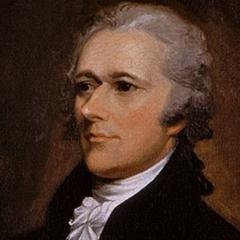
Alexander Hamilton
Alexander Hamilton was a Founding Father of the United States, born on January 11, 1757, and died on July 12, 1804. He played a crucial role in the American Revolutionary War and was instrumental in the drafting of the U.S. Constitution. As the first Secretary of the Treasury, Hamilton promoted fiscal stability and economic growth, establishing the First Bank of the United States and proposing solutions for federal debt. His ideas and policies had a profound impact on the early political and economic development of the United States. more
You May Also Like
Source: The works of Alexander Hamilton: comprising his correspondence, and his political and official writings, exclusive of the Federalist, civil and military. Published from the original manuscripts deposited in the Department of State, by order of the Joint Library Committee of Congress
Source: Commentaries on the Constitution of the United States: With a Preliminary Review of the Constitutional History of the Colonies and States, Before the Adoption of the Constitution
Source: The Vision of Hamilton: Hamilton's 4 Reports and LaRouche's 4 Laws
Source: The Essential Federalist: A New Reading of the Federalist Papers
Source: The Federalist, on the New Constitution, Written in the Year 1788
Source: The Federalist, on the New Constitution, Written in the Year 1788
Source: The Federalist: On the New Constitution, Written in 1788
Source: Selected Federalist Papers