“I would have government defend the life and property of all citizens equally; protect all willing exchange; suppress and penalize all fraud, all misrepresentation, all violence, all predatory practices; invoke a common justice under law; and keep the records incidental to these functions. Even this is a bigger assignment than governments, generally, have proven capable of. Let governments do these things and do them well. Leave all else to men in free and creative effort.”
Quote by Leonard Read
Author
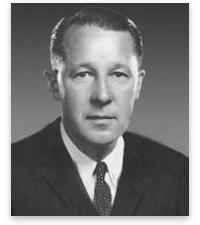
Leonard Read
Leonard Read was an influential economist, writer, and thinker who made significant contributions to the theory of free-market economics. His work 'I, Pencil' had a profound impact on the understanding of free-market principles in the mid-20th century. more
You May Also Like
Source: The Debates in the Several State Conventions on the Adoption of the Federal Constitution: As Recommended by the General Convention at Philadelphia in 1787. Together with the Journal of the Federal Convention, Luther Martin's Letter, Yates's Minutes, Congressional Opinions, Virginia and Kentucky Resolutions of '98-'99, and Other Illustrations of the Constitution
Source: Human Action
“If you think you understand what I am saying you do not understand what I am saying.”
“Computers show up everywhere except the growth statistics.”
Source: The Second Crisis of Economic Theory: And Other Selected Papers from the American Economic Meeting, December 27-29, 1971
Source: The collected writings of John Maynard Keynes