“Appealing to his [Einstein's] way of expressing himself in theological terms, I said: If God had wanted to put everything into the universe from the beginning, He would have created a universe without change, without organisms and evolution, and without man and man's experience of change. But he seems to have thought that a live universe with events unexpected even by Himself would be more interesting than a dead one.”
Quote by Karl Popper
Work
Unended Quest: An Intellectual Autobiography
This book offers a candid look into the life and thoughts of the author, detailing their intellectual development and the influences that shaped their worldview. more
Author
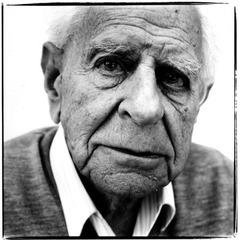
Karl Popper
Karl Popper (July 28, 1902 – September 17, 1994) was an influential philosopher known for his work on critical rationalism and falsificationism. He is renowned for his contributions to the philosophy of science, political philosophy, and epistemology, with his ideas having a profound impact on these fields. more
You May Also Like
Source: The Logic of Scientific Discovery
Source: The Logic of Scientific Discovery
Source: The Open Society and Its Enemies
“All things living are in search of a better world .”
Source: In Search of a Better World: Lectures and Essays from Thirty Years
Source: The Post-American World: And The Rise Of The Rest
Source: The Future of Freedom: Illiberal Democracy at Home and Abroad (Revised Edition)
Source: The Future of Freedom: Illiberal Democracy at Home and Abroad (Revised Edition)