“Among the lower classes of mankind there will be found very little desire of any other knowledge than what may contribute immediately to the relief of some pressing uneasiness, or the attainment of some near advantage.”
Quote by Samuel Johnson
Work
The Rambler: A Periodical Paper, Published in 1750, 1751, 1752
The Rambler is a series of periodical papers that were published in three separate volumes, spanning the years 1750, 1751, and 1752. Each volume consists of a variety of essays and articles, covering a range of topics including social issues, literature, and philosophy. The work is notable for its contribution to the development of the essay form and its influence on subsequent literary works. more
Author
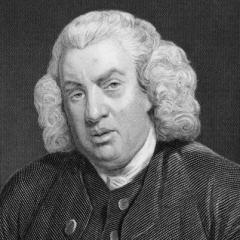
Samuel Johnson
Samuel Johnson was an English writer, poet, and lexicographer, renowned for his comprehensive English dictionary, 'A Dictionary of the English Language', published in 1755. His distinctive writing style and wit have cemented his place as a significant figure in the history of English literature. more
You May Also Like
Source: The Works of Samuel Johnson, LL.D.: With Murphy's Essay
“I have always meticulously storyboarded my films from beginning to end.”
“Curiosity, like all other desires, produces pain as well as pleasure.”
Source: The Beauties of Samuel Johnson, LL.D.: Consisting of Maxims and Observations, Moral, Critical, and Miscellaneous, to which are Now Added, Biographical Anecdotes of the Doctor, Selected from the Late Productions of Mrs. Piozzi, Mr. Boswell, ...
Source: Select Essays
Source: The Rambler
Source: The Works of Samuel Johnson, LL.D..: The Adventurer and Idler
“Forgiveness is the highest and most difficult of all moral lessons.”
Source: Jewish Ideals: And Other Essays
“Who would care to question the ground of forgiveness or compassion.”
Source: Under Western Eyes
“We never ask God to forgive anybody except when we haven't.”