Quotessence
Home / Quotes / Quote by Marcel Proust

Quote by Marcel Proust

“But certain favourite roles are played by us so often before the public and rehearsed so carefully when we are alone that we find it easier to refer to their fictitious testimony than to that of a reality which we have almost entirely forgotten.”

Quote by Marcel Proust

Work

In the shadow of young girls in flower

This book delves into the experiences and emotions of young girls as they navigate the challenges of growing up, offering a nuanced portrayal of their relationships and personal journeys. more

Author
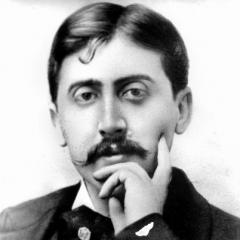
Marcel Proust
Marcel Proust

Marcel Proust was a French novelist renowned for his magnum opus, 'In Search of Lost Time'. This novel is considered a classic of 20th-century literature, known for its intricate psychological portrayals and profound exploration of memory. more

You May Also Like

“As neoliberalism wages war on public goods and the very idea of a public, including citizenship beyond membership, it dramatically thins public life without killing politics. Struggles remain over power, hegemonic values, resources, and future trajectories. This persistence of politics amid the destruction of public life and especially educated public life, combined with the marketization of the political sphere, is part of what makes contemporary politics peculiarly unappealing and toxic— full of ranting and posturing, emptied of intellectual seriousness, pandering to an uneducated and manipulable electorate and a celebrity-and-scandal-hungry corporate media. Neoliberalism generates a condition of politics absent democratic institutions that would support a democratic public and all that such a public represents at its best: informed passion, respectful deliberation, aspirational sovereignty, sharp containment of powers that would overrule or undermine it.”

“Indeed, fascist regimes tried to redraw so radically the boundaries between private and public that the private sphere almost disappeared. Robert Ley, head of the Nazi Labor Office, said that in the Nazi state the only private individual was someone asleep. For some observers, this effort to have the public sphere swallow up the private sphere entirely is indeed the very essence of fascism. It is certainly a fundamental point on which fascist regimes differed most profoundly from authoritarian conservatism, and even more profoundly from classical liberalism. There was no room in this vision of obligatory national unity for either free-thinking persons or for independent, autonomous subcommunities. Churches, Freemasonry, class-based unions or syndicates, political parties— all were suspect as subtracting something from the national will.121 Here were grounds for infinite conflict with conservatives as well as the Left. In pursuit of their mission to unify the community within an all-consuming public sphere, fascist regimes dissolved unions and socialist parties. This radical amputation of what had been normal worker representation, encased as it was in a project of national fulfillment and managed economy, alienated public opinion less than pure military or police repression, as in traditional dictatorships. And indeed the fascists had some success in reconciling some workers to a world without unions or socialist parties, those for whom proletarian solidarity against capitalist bosses was willingly replaced by national identity against other peoples. Brooding about cultural degeneracy was so important a fascist issue that some authors have put it at the center. Every fascist regime sought to control the national culture from the top, to purify it of foreign influences, and make it help carry the message of national unity and revival. Decoding the cultural messages of fascist ceremonies, films, performances, and visual arts has today become the most active field of research on fascism. The “reading” of fascist stagecraft, however ingenious, should not mislead us into thinking that fascist regimes succeeded in establishing monolithic cultural homogeneity. Cultural life in fascist regimes remained a complex patchwork of official activities, spontaneous activities that the regimes tolerated, and even some illicit ones. Ninety percent of the films produced under the Nazi regime were light entertainment without overt propaganda content (not that it was innocent, of course). A few protected Jewish artists hung on remarkably late in Nazi Germany, and the openly homosexual actor and director Gustav Gründgens remained active to the end.”