“He who has attained the freedom of reason to any extent cannot, for a long time, regard himself otherwise than as a wanderer on the face of the earth - and not even as a traveler towards a final goal, for there is no such thing. But he certainly wants to observe and keep his eyes open to whatever actually happens in the world; therefore he cannot attach his heart too firmly to anything individual; he must have in himself something wandering that takes pleasure in change and transitoriness.”
Quote by Friedrich Nietzsche
Author
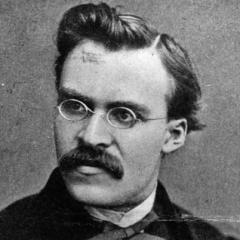
Friedrich Nietzsche
Friedrich Nietzsche was a German philosopher, cultural critic, poet, and writer whose works have had a profound impact on subsequent philosophy, literature, and thought. His ideas revolve around concepts such as the 'will to power', the 'Übermensch', and the 'eternal recurrence'. more
You May Also Like
Source: Sex, Drugs, and Cocoa Puffs: A Low Culture Manifesto
“I once loved a girl who almost loved me, but not as much as she loved John Cusack.”
Source: Sex, Drugs, and Cocoa Puffs
Source: Sex, Drugs, and Cocoa Puffs: A Low Culture Manifesto
Source: Sex, Drugs, and Cocoa Puffs: A Low Culture Manifesto
“Being interesting has been replaced by being identifiable.”
Source: What Happens When People Stop Being Polite: An Essay from Sex, Drugs, and Cocoa Puffs
“The best computer is a man, and it’s the only one that can be mass-produced by unskilled labor.”
Source: George Will vs. Nick Hornby: An Essay from Sex, Drugs, and Cocoa Puffs
“He who moves not forward, goes backward.”
Source: Delphi Works of Johann Wolfgang von Goethe (Illustrated)