Quotessence
Home / Quotes / Quote by Paul Klee

Quote by Paul Klee

“It is possible that a picture will move far away from Nature and yet find its way back to reality. The faculty of memory, experience at a distance produces pictorial associations.”

Quote by Paul Klee

Work

Paul Klee notebooks

This compilation includes a variety of sketches, watercolors, and notes from the artist, providing insight into his artistic development and personal reflections. more
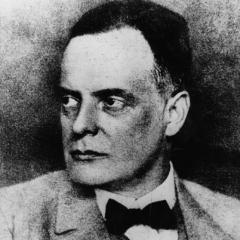
Author

Paul Klee
Paul Klee

Paul Klee was a Swiss-born German expressionist painter known for his unique style and color usage. His works combined abstract and representational elements and often carried symbolic meanings. Klee's influence on the art world was profound, and he is considered one of the most important artists of the 20th century. more

You May Also Like

“On the left is the realist tradition of the 19th century, with its impulse to social description, radical criticism and meditation on things as they are... culminating in Courbet at his mightiest (The Studio, The Funeral at Ornans and a portrait of a trout that has more death in it than Rubens could get in a whole Crucifixion).”

“No longer can we consider what the artist does to be a self-contained activity, mysteriously inspired from above, unrelated and unrelatable to other human activities. Instead, we recognize the exalted kind of seeing that leads to the creation of great art as an outgrowth of the humbler and more common activity of the eyes in everyday life. Just as the prosaic search for information is "artistic" because it involves giving and finding shape and meaning, so the artist's conceiving is an instrument of life, a refined way of understanding who and where we are.”

“But art not only exploits the variety of appearances, it also affirms the validity of individual outlook and thereby admits a further dimension of variety. Since the shapes of art do not primarily bear witness to the objective nature of the things for which they stand, they can reflect individual interpretation and invention.”

“Television is a new, hard test of our wisdom. If we succeed in mastering the new medium it will enrich us. But it can also put our mind to sleep. We must not forget that in the past the inability to transport immediate experience and to convey it to others made the use of language necessary and thus compelled the human mind to develop concepts. For in order to describe things one must draw the general from the specific; one must select, compare, think. When communication can be achieved by pointing with the finger, however, the mouth grows silent, the writing hand stops, and the mind shrinks.”