“Order is a prerequisite of survival; therefore the impulse to produce orderly arrangements is inbred by evolution.”
Quote by Rudolf Arnheim
Work
Entropy and Art: An Essay on Disorder and Order
In 'Entropy and Art: An Essay on Disorder and Order,' the author delves into the intricate relationship between entropy, a measure of disorder, and order, which is often associated with structure and harmony. The book investigates how artists have historically navigated these opposing forces, offering insights into the creation of art that balances chaos and control. It includes discussions on various art forms, historical periods, and theoretical frameworks, providing a comprehensive analysis of the interplay between entropy and artistic creation. more
Author
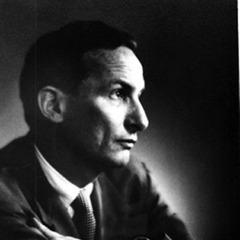
Rudolf Arnheim
Rudolf Arnheim was a renowned art theorist and psychologist, known for his profound insights into visual art and aesthetic experience. His work spans various fields including art psychology, film theory, and visual culture. more
You May Also Like
Source: Film as Art
Source: Parables of Sun Light: Observations on Psychology, the Arts, and the Rest
Source: Parables of Sun Light: Observations on Psychology, the Arts, and the Rest
Source: Visual Thinking
Source: Parables of Sun Light: Observations on Psychology, the Arts, and the Rest
Source: Film as Art
Source: Parables of Sun Light: Observations on Psychology, the Arts, and the Rest
Source: Entropy and Art: An Essay on Disorder and Order
Source: Parables of Sun Light: Observations on Psychology, the Arts, and the Rest