Quotessence
Home / Quotes / Quote by John Ray

Quote by John Ray

Work

A Hand-book of Proverbs: Comprising an Entire Republication of Ray's Collection of English Proverbs, with His Additions from Foreign Languages : and an Alphabetical Index, in which are Introduced Large Additions, as Well of Proverbs as of Sayings, Sentences, Maxims, and Phrases

A comprehensive compilation of English proverbs, this book also features a substantial addition of proverbs and sayings from different languages. It is organized alphabetically for convenient lookup, making it a valuable resource for those interested in proverbial wisdom and linguistic diversity. more

Author
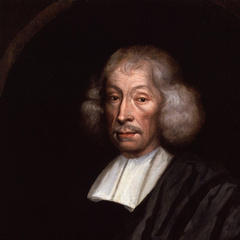
John Ray
John Ray

John Ray, born on November 29, 1627, and died on January 17, 1705, was a renowned British botanist and naturalist. He made significant contributions to the development of botanical taxonomy. more

You May Also Like

“Coupled with Usury, Unrestricted Competition destroys the small man for the profit of the great and in so doing produces that mass of economically unfree citizens whose very political freedom comes in question because it has no foundation in any economic freedom, that is, any useful proportion of property to support it. Political freedom without economic freedom is almost worthless, and it is because the modern proletariat has the one kind of freedom without the other that its rebellion is now threatening the very structure of the modern world.”

“Roque...lined his men up and had them produce all the clothing, jewels, money, and other objects that they had stolen since the last time they had divided the spoils. Having made a hasty appraisal and reduced to terms of money those items that could not be divided, he split the whole into shares with such equity and exactitude that in not a single instance did he go beyond or fall short of a strict distributive justice. They were all well satisfied with the payment received, indeed they were quite well pleased; and Roque then turned to Don Quixote.”

“However, if we leave the industrial machinery and their energy-distribution networks and leave them also all the people who have routine jobs operating the industrial machinery and distributing its products, and we take away from all the industrial countries all their ideologies and all the politicians and political machine workers, people would keep right on eating. Possibly getting on a little better than before.”

“Truth is found neither in Marxism nor in traditional capitalism. Each represents a partial truth. Historically capitalism failed to see the truth in collective enterprise, and Marxism failed to see the truth in individual enterprise. Nineteenth century capitalism failed to see that life is social and Marxism failed and still fails to see that life is individual and personal. The Kingdom of God is neither the thesis of individual enterprise nor the antithesis of collective enterprise, but a synthesis which reconciles the truths of both.”

“It must be assumed and established as a principle, that the right of private property must be regarded as sacred. Wherefore, the law ought to favor this right and, so far as it can, see that the largest possible number among the masses of the population prefer to own property.... But if the productive activity of the multitude can be stimulated by the hope of acquiring some property... , it will gradually come to pass that, with the difference between extreme wealth and extreme penury removed, one class will become the neighbor to the other.”