Quotessence
Home / Quotes / Quote by Philippa Gregory

Quote by Philippa Gregory

“Like almost all girls I don't know the date of my birth: my parents did not trouble to record the day and the time. I only know the year and the season, and I only know the season because my mother had a great desire for asparagus when she was carrying me and swears that she ate it too green and her bellyache brought on my birth.”

Quote by Philippa Gregory

Work

The Lady of the Rivers

This novel delves into the life of a woman who navigates the tumultuous political landscape of her time, showcasing her resilience and influence amidst the backdrop of English history. more

Author
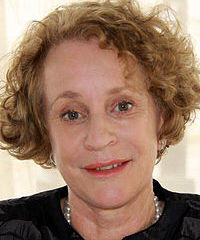
Philippa Gregory
Philippa Gregory

Philippa Gregory is a celebrated British historical fiction author, recognized for her works that delve into the lives of historical figures and events, particularly during the Wars of the Roses. Born on January 9, 1954, she has gained prominence in the genre, with her novels often adapted for television and film. more

You May Also Like

“Although previous studies had suggested that friendship--male and female--could be a powerful antidote to stress, more recent research indicates that broken promises, dashed expectations, and other side effects of friendship gone wrong can actually raise the level of stress in our lives, often to disastrous effect.”

“It's a fine, warm day,” Henry replied. “I thought a spot of fishing?” “Just the thing!” said Felix. “Will you join us, Lucy?” Lucy felt Kitty and Sophia staring at her. Well-bred ladies, evidently, did not fish. “Oh, no! I assure you, Mr. Crowley-Cumberbatch, I have given up those hoyden pursuits of my youth.” She turned to Toby. “I haven't been fishing in ages. I can't remember the last time.” “Really, Luce?” Toby sounded incredulous. “Henry—is it true?” Henry sawed away at a slice of ham. “If you count six days as ages, then I suppose it's true. But if you can't remember six days back, Lucy, and you've forgotten Felix's Christian name, I'm concerned for you. Perhaps you've been spending too much time with Aunt Matilda.”

“Lo sguardo delle donne assomiglia a certi congegni tranquilli in apparenza ma formidabili. Vi si passa vicino tutti i giorni pacificamente e impunemente, senza dubitare di nulla. Viene il momento in cui ci si dimentica anche che quella cosa è là. Si va, si viene, si sogna, si parla, si ride. A un tratto ci si sente presi! E' finita. Il congegno vi ha preso, lo sguardo vi ha catturato. Vi ha preso, non importa dove, né come, per una parte qualsiasi del vostro pensiero, per una distrazione. Un concatenamento di forze misteriose si impadronisce di voi. Vi dibattete invano. Non ci sono più soccorsi umani possibili. Cadete di ingranaggio in ingranaggio, di angoscia in angoscia, di tortura in tortura, voi, il vostro spirito, le vostre fortune, il vostro avvenire, l'anima vostra; e, a seconda che siate in potere di una creatura cattiva o di un nobile cuore, non uscirete da quella spaventosa macchina che sfigurato dalla vergogna o trasfigurato dalla passione.”

“It is not perhaps a question of truthfulness; it is rather a natural incapacity to think for herself, to take cognizance of herself in her own brain, and not in the eyes and in the lips of others; even when the ingenuously write into little secret diaries, women think of the unknown god reading--perhaps--over their shoulders. With a similar nature, a woman, to be placed in the first ranks of men, would require even higher genius than that of the highest man; that is why, if the conspicuous works of men themselves, the finest works of women are always inferior to the worth of the women who produced them.”