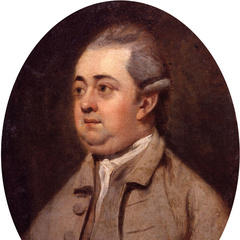
“The grateful applause of the clergy has consecrated the memory of a prince, who indulged their passions and promoted their interest. Constantine gave them security, wealth, honours, and revenge; and the support of the orthodox faith was considered as the most sacred and important duty of the civil magistrate. The edict of Milan, the great charter of toleration, had confirmed to each individual of the Roman world the privilege of choosing and professing his own religion.”
Quote by Edward Gibbon
“But this inestimable privilege was soon violated: with the knowledge of truth the emperor imbibed the maxims of persecution; and the sects which dissented from the catholic church were afflicted and oppressed by the triumph of Christianity. Constantine easily believed that the heretics, who presumed to dispute his opinions or to oppose his commands, were guilty of the most absurd and criminal obstinacy; and that a seasonable application of moderate severities might save those unhappy men from the danger of an everlasting condemnation.”
Source: The History of the Decline and Fall of the Roman Empire
“Where the subject lies so far beyond our reach, the difference between the highest and the lowest of human understandings may indeed be calculated as infinitely small; yet the degree of weakness may perhaps be measured by the degree of obstinacy and dogmatic confidence.”
Source: The History of the Decline and Fall of the Roman Empire
“If the emperor had capriciously decreed the death of the most eminent and virtuous citizen of the republic, the cruel order would have been executed without hesitation by the ministers of open violence or of specious injustice. The caution, the delay, the difficulty with which he proceeded in the condemnation and punishment of a popular bishop, discovered to the world that the privileges of the church had already revived a sense of order and freedom in the Roman government.”
Source: Delphi Complete Works of Edward Gibbon (Illustrated)
“Corruption, the most infallible symptom of constitutional liberty, was successfully practised; honours, gifts, and immunities were offered and accepted as the price of an episcopal vote; and the condemnation of the Alexandrian primate was artfully represented as the only measure which could restore the peace and union of the catholic church.”
Source: The History of the Decline and Fall of the Roman Empire
“The retirement of Athanasius, which ended only with the life of Constantius, was spent, for the most part, in the society of the monks, who faithfully served him as guards, as secretaries, and as messengers; but the importance of maintaining a more intimate connection with the catholic party tempted him, whenever the diligence of the pursuit was abated, to emerge from the desert, to introduce himself into Alexandria, and to trust his person to the discretion of his friends and adherents.”
Source: Decline and Fall of the Roman Empire
“While the Romans languished under the ignominious tyranny of eunuchs and bishops, the praises of Julian were repeated with transport in every part of the empire, except in the palace of Constantius.”
Source: THE HISTORY OF THE DECLINE AND FALL OF THE ROMAN EMPIRE (All 6 Volumes): From the Height of the Roman Empire, the Age of Trajan and the Antonines - to the Fall of Byzantium; Including a Review of the Crusades, and the State of Rome during the Middle Ages
“The barbarians of Germany had felt, and still dreaded, the arms of the young Caesar; his soldiers were the companions of his victory; the grateful provincials enjoyed the blessings of his reign; but the favourites, who had opposed his elevation, were offended by his virtues; and they justly considered the friend of the people as the enemy of the court.”
Source: The History of the Decline and Fall of the Roman Empire
“Philosophy had instructed Julian to compare the advantages of action and retirement; but the elevation of his birth and the accidents of his life never allowed him the freedom of choice. He might perhaps sincerely have preferred the groves of the Academy and the society of Athens; but he was constrained, at first by the will, and afterwards by the injustice of Constantius, to expose his person and fame to the dangers of Imperial greatness; and to make himself accountable to the world and to posterity for the happiness of millions.”
Source: THE HISTORY OF THE DECLINE AND FALL OF THE ROMAN EMPIRE (All 6 Volumes): From the Height of the Roman Empire, the Age of Trajan and the Antonines - to the Fall of Byzantium; Including a Review of the Crusades, and the State of Rome during the Middle Ages
“Julian was not insensible of the advantages of freedom. From his studies he had imbibed the spirit of ancient sages and heroes; his life and fortunes had depended on the caprice of a tyrant; and, when he ascended the throne, his pride was sometimes mortified by the reflection that the slaves who would not dare to censure his defects were not worthy to applaud his virtues.”
Source: Delphi Complete Works of Edward Gibbon (Illustrated)
“Julian sincerely abhorred the system of oriental despotism which Diocletian, Constantine, and the patient habits of four score years, had established in the empire. A motive of superstition prevented the execution of the design which Julian had frequently meditated, of relieving his head from the weight of a costly diadem; but he absolutely refused the title of Dominus or Lord, a word which was grown so familiar to the ears of the Romans, that they no longer remembered its servile and humiliating origin.”
Source: The Modern Library Essential World History 4-Book Bundle: The Decline and Fall of the Roman Empire (Abridged); Montcalm and Wolfe; History of the Conquest of Mexico; The Naval War of 1812