“If the emperor had capriciously decreed the death of the most eminent and virtuous citizen of the republic, the cruel order would have been executed without hesitation by the ministers of open violence or of specious injustice. The caution, the delay, the difficulty with which he proceeded in the condemnation and punishment of a popular bishop, discovered to the world that the privileges of the church had already revived a sense of order and freedom in the Roman government.”
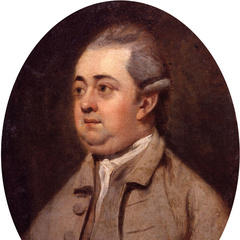
Quote by Edward Gibbon
“Corruption, the most infallible symptom of constitutional liberty, was successfully practised; honours, gifts, and immunities were offered and accepted as the price of an episcopal vote; and the condemnation of the Alexandrian primate was artfully represented as the only measure which could restore the peace and union of the catholic church.”
Source: The History of the Decline and Fall of the Roman Empire
“The retirement of Athanasius, which ended only with the life of Constantius, was spent, for the most part, in the society of the monks, who faithfully served him as guards, as secretaries, and as messengers; but the importance of maintaining a more intimate connection with the catholic party tempted him, whenever the diligence of the pursuit was abated, to emerge from the desert, to introduce himself into Alexandria, and to trust his person to the discretion of his friends and adherents.”
Source: Decline and Fall of the Roman Empire
“While the Romans languished under the ignominious tyranny of eunuchs and bishops, the praises of Julian were repeated with transport in every part of the empire, except in the palace of Constantius.”
Source: THE HISTORY OF THE DECLINE AND FALL OF THE ROMAN EMPIRE (All 6 Volumes): From the Height of the Roman Empire, the Age of Trajan and the Antonines - to the Fall of Byzantium; Including a Review of the Crusades, and the State of Rome during the Middle Ages
“The barbarians of Germany had felt, and still dreaded, the arms of the young Caesar; his soldiers were the companions of his victory; the grateful provincials enjoyed the blessings of his reign; but the favourites, who had opposed his elevation, were offended by his virtues; and they justly considered the friend of the people as the enemy of the court.”
Source: The History of the Decline and Fall of the Roman Empire
“Philosophy had instructed Julian to compare the advantages of action and retirement; but the elevation of his birth and the accidents of his life never allowed him the freedom of choice. He might perhaps sincerely have preferred the groves of the Academy and the society of Athens; but he was constrained, at first by the will, and afterwards by the injustice of Constantius, to expose his person and fame to the dangers of Imperial greatness; and to make himself accountable to the world and to posterity for the happiness of millions.”
Source: THE HISTORY OF THE DECLINE AND FALL OF THE ROMAN EMPIRE (All 6 Volumes): From the Height of the Roman Empire, the Age of Trajan and the Antonines - to the Fall of Byzantium; Including a Review of the Crusades, and the State of Rome during the Middle Ages
“Julian was not insensible of the advantages of freedom. From his studies he had imbibed the spirit of ancient sages and heroes; his life and fortunes had depended on the caprice of a tyrant; and, when he ascended the throne, his pride was sometimes mortified by the reflection that the slaves who would not dare to censure his defects were not worthy to applaud his virtues.”
Source: Delphi Complete Works of Edward Gibbon (Illustrated)
“Julian sincerely abhorred the system of oriental despotism which Diocletian, Constantine, and the patient habits of four score years, had established in the empire. A motive of superstition prevented the execution of the design which Julian had frequently meditated, of relieving his head from the weight of a costly diadem; but he absolutely refused the title of Dominus or Lord, a word which was grown so familiar to the ears of the Romans, that they no longer remembered its servile and humiliating origin.”
Source: The Modern Library Essential World History 4-Book Bundle: The Decline and Fall of the Roman Empire (Abridged); Montcalm and Wolfe; History of the Conquest of Mexico; The Naval War of 1812
“During the games of the Circus, he had, imprudently or designedly, performed the manumission of a slave in the presence of the consul. The moment he was reminded that he had trespassed on the jurisdiction of another magistrate, he condemned himself to pay a fine of ten pounds of gold, and embraced this public occasion of declaring to the world that he was subject, like the rest of his fellow-citizens, to the laws, and even to the forms, of the republic.”
Source: The History of the Decline and Fall of the Roman Empire: Edited in Seven Volumes with Introduction, Notes, Appendices, and Index
“Instructed by history and reflection, Julian was persuaded that, if the diseases of the body may sometimes be cured by salutary violence, neither steel nor fire can eradicate the erroneous opinions of the mind.”
Source: Decline and Fall of the Roman Empire
“Actuated by these motives, and apprehensive of disturbing the repose of an unsettled reign, Julian surprised the world by an edict which was not unworthy of a statesman or a philosopher. He extended to all the inhabitants of the Roman world the benefits of a free and equal toleration; and the only hardship which he inflicted on the Christians was to deprive them of the power of tormenting their fellow-subjects, whom they stigmatised with the odious titles of idolaters and heretics.”
Source: THE HISTORY OF THE DECLINE AND FALL OF THE ROMAN EMPIRE (All 6 Volumes): From the Height of the Roman Empire, the Age of Trajan and the Antonines - to the Fall of Byzantium; Including a Review of the Crusades, and the State of Rome during the Middle Ages