“During the games of the Circus, he had, imprudently or designedly, performed the manumission of a slave in the presence of the consul. The moment he was reminded that he had trespassed on the jurisdiction of another magistrate, he condemned himself to pay a fine of ten pounds of gold, and embraced this public occasion of declaring to the world that he was subject, like the rest of his fellow-citizens, to the laws, and even to the forms, of the republic.”
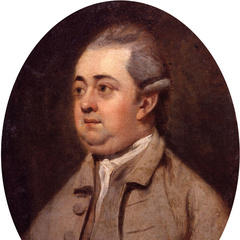
Quote by Edward Gibbon
“Instructed by history and reflection, Julian was persuaded that, if the diseases of the body may sometimes be cured by salutary violence, neither steel nor fire can eradicate the erroneous opinions of the mind.”
Source: Decline and Fall of the Roman Empire
“Actuated by these motives, and apprehensive of disturbing the repose of an unsettled reign, Julian surprised the world by an edict which was not unworthy of a statesman or a philosopher. He extended to all the inhabitants of the Roman world the benefits of a free and equal toleration; and the only hardship which he inflicted on the Christians was to deprive them of the power of tormenting their fellow-subjects, whom they stigmatised with the odious titles of idolaters and heretics.”
Source: THE HISTORY OF THE DECLINE AND FALL OF THE ROMAN EMPIRE (All 6 Volumes): From the Height of the Roman Empire, the Age of Trajan and the Antonines - to the Fall of Byzantium; Including a Review of the Crusades, and the State of Rome during the Middle Ages
“It is the common calamity of old age to lose whatever might have rendered it desirable.”
Source: The History of the Decline and Fall of the Roman Empire, 3: Complete in Eight Volumes
“If Julian had flattered himself that his personal connexion with the capital of the East would be productive of mutual satisfaction to the prince and people, he made a very false estimate of his own character, and of the manners of Antioch. The warmth of the climate disposed the natives to the most intemperate enjoyment of tranquillity and opulence; and the lively licentiousness of the Greeks was blended with the hereditary softness of the Syrians.”
Source: The Student's Gibbon: The History of the Decline and Fall of the Roman Empire
“Fashion was the only law, pleasure the only pursuit, and the splendour of dress and furniture was the only distinction of the citizens of Antioch. The arts of luxury were honoured; the serious and manly virtues were the subject of ridicule; and the contempt for female modesty and reverent age announced the universal corruption of the capital of the East.”
Source: The History of the Decline and Fall of the Roman Empire
“The love of spectacles was the taste, or rather passion, of the Syrians: the most skilful artists were procured form the adjacent cities; a considerable share of the revenue was devoted to the public amusements; and the magnificence of the games of the theatre and circus was considered as the happiness, and as the glory, of Antioch.”
Source: Decline and Fall of the Roman Empire
“When Julian ascended the throne, he declared his impatience to embrace and reward the Syrian sophist, who had preserved, in a degenerate age, the Grecian purity of taste, of manners and of religion. The emperor's prepossession was increased and justified by the discreet pride of his favourite.”
Source: The History of the Decline and Fall of the Roman Empire
“Instead of pressing, with the foremost of the crowd, into the palace of Constantinople, Libanius calmly expected his arrival at Antioch; withdrew from court on the first symptoms of coldness and indifference; required a formal invitation for each visit; and taught his sovereign an important lesson, that he might command the obedience of a subject, but that he must deserve the attachment of a friend.”
Source: The History of the Decline and Fall of the Roman Empire
“The slightest force, when it is applied to assist and guide the natural descent of its object, operates with irresistible weight; and Jovian had the good fortune to embrace the religious opinions which were supported by the spirit of the times and the zeal and numbers of the most powerful sect. Under his reign, Christianity obtained an easy and lasting victory; and, as soon as the smile of royal patronage was withdrawn, the genius of Paganism, which had been fondly raised and cherished by the arts of Julian, sunk irrecoverably in the dust.”
Source: THE HISTORY OF THE DECLINE AND FALL OF THE ROMAN EMPIRE (All 6 Volumes): From the Height of the Roman Empire, the Age of Trajan and the Antonines - to the Fall of Byzantium; Including a Review of the Crusades, and the State of Rome during the Middle Ages
“Philosophy alone can boast (and perhaps it is no more than the boast of philosophy), that her gentle hand is able to eradicate from the human mind the latent and deadly principle of fanaticism.”
Source: The History of the Decline and Fall of the Roman Empire