Quotessence
Home / Quotes / Quote by Edward Gibbon

Quote by Edward Gibbon

Work

The History of the Decline and Fall of the Roman Empire, 3: Complete in Eight Volumes

This book is the third volume of a multi-volume work that meticulously chronicles the political, social, and economic factors contributing to the fall of the Roman Empire. It delves into the complexities of Roman governance, military campaigns, and the cultural shifts that led to the empire's ultimate collapse. more

Author
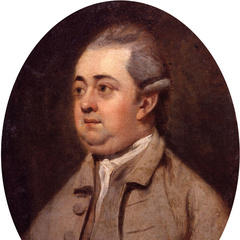
Edward Gibbon
Edward Gibbon

Edward Gibbon was an English historian renowned for his magnum opus, 'The History of the Decline and Fall of the Roman Empire'. His work has had a profound impact on historical studies. more

You May Also Like

“If Julian had flattered himself that his personal connexion with the capital of the East would be productive of mutual satisfaction to the prince and people, he made a very false estimate of his own character, and of the manners of Antioch. The warmth of the climate disposed the natives to the most intemperate enjoyment of tranquillity and opulence; and the lively licentiousness of the Greeks was blended with the hereditary softness of the Syrians.”

“Fashion was the only law, pleasure the only pursuit, and the splendour of dress and furniture was the only distinction of the citizens of Antioch. The arts of luxury were honoured; the serious and manly virtues were the subject of ridicule; and the contempt for female modesty and reverent age announced the universal corruption of the capital of the East.”

“The love of spectacles was the taste, or rather passion, of the Syrians: the most skilful artists were procured form the adjacent cities; a considerable share of the revenue was devoted to the public amusements; and the magnificence of the games of the theatre and circus was considered as the happiness, and as the glory, of Antioch.”

“When Julian ascended the throne, he declared his impatience to embrace and reward the Syrian sophist, who had preserved, in a degenerate age, the Grecian purity of taste, of manners and of religion. The emperor's prepossession was increased and justified by the discreet pride of his favourite.”

“Instead of pressing, with the foremost of the crowd, into the palace of Constantinople, Libanius calmly expected his arrival at Antioch; withdrew from court on the first symptoms of coldness and indifference; required a formal invitation for each visit; and taught his sovereign an important lesson, that he might command the obedience of a subject, but that he must deserve the attachment of a friend.”

“The slightest force, when it is applied to assist and guide the natural descent of its object, operates with irresistible weight; and Jovian had the good fortune to embrace the religious opinions which were supported by the spirit of the times and the zeal and numbers of the most powerful sect. Under his reign, Christianity obtained an easy and lasting victory; and, as soon as the smile of royal patronage was withdrawn, the genius of Paganism, which had been fondly raised and cherished by the arts of Julian, sunk irrecoverably in the dust.”

“The triumph of the Romans was indeed sullied by their treatment of the captive king, whom they hung on a gibbet without the knowledge of their indignant general. This disgraceful act of cruelty which might be imputed to the fury of the troops, was followed by the deliberate murder of Withicab, the son of Vadomair; a German prince, of a weak and sickly constitution, but of a daring and formidable spirit.”

“Sixty thousand blacks are annually embarked from the coast of Guinea, never to return to their native country; but they are embarked in chains: and this constant emigration, which, in the space of two centuries, might have furnished armies to overrun the globe, accuses the guilt of Europe and the weakness of Africa.”

“It was the fashion of the times to attribute every remarkable event to the particular will of the Deity; the alterations of nature were connected, by an invisible chain, with the moral and metaphysical opinions of the human mind; and the most sagacious divines could distinguish, according to the colour of their respective prejudices, that the establishment of heresy tended to produce an earthquake, or that a deluge was the inevitable consequence of the progress of sin and error.”