Quotessence
Home / Quotes / Quote by Victor Hugo

Quote by Victor Hugo

Work

Hunchback Of Notre Dame

Browse quotes and source details for this work. more

Author
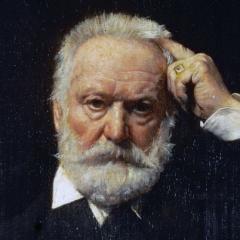
Victor Hugo
Victor Hugo

Victor Hugo, a French romantic poet, novelist, and playwright, was born on February 26, 1802, and died on May 22, 1885. He is considered one of the greatest writers in French literary history, known for his profound humanistic concerns and rich imagination. more

You May Also Like

“Quasimodo allora alzò nuovamente lo sguardo sull’egiziana di cui vedeva il corpo, appeso alla forca, fremere da lontano sotto l’abito bianco negli ultimi spasimi dell’agonia, poi li abbassò sull’arcidiacono disteso ai piedi della torre senza più forma umana, e disse con un singhiozzo dal profondo del petto: «Oh! Tutto ciò ce ho amato!»" -Notre-Dame de Paris, V. Hugo”

“But there it was- crackling inside my veins. Crackling beside veins of ice, and water. And darkness. Embers flared around us, floating in the air, and I sent out a breath of soothing dark, a breath of ice and water, as if it were a wind- a wind at dawn, sweeping clean the world. The power did not belong to the High Lords. Not any longer. It belonged to me- as I belonged only to me, as my future was mine to decide, to forge. Once I discovered and mastered what the others had given me, I could weave them together- into something new, something of every court and none of them.”

“Virtue only needs to be worshipped; it follows the path to happiness...it must be so, a thousand arms open to receive its devotees, if they are pursued by adversity. But everybody deserts the guilty man...one blushes at one's attachment to him or at the tears one sheds for him, there is a fear of contagion, he is banished from everybody's hearts, and one condemns out of pride the man one ought to help out of humanity.”

“In Scappi's cookbook we see the first Italian recipes ever published that rely heavily on dairy, particularly butter and cheeses. There are also numerous recipes for pasta. Turkey makes its first appearance in an Italian cookbook. And many of us today are familiar with a recipe first found in L'Opera: zabaglione. The flavors that are prevalent in the cookbook are a little cloying to modern audiences, relying heavily on rosewater, sugar, pepper, ginger, nutmeg, and cinnamon. These flavors make sense in the variety of flaky pastries that are described in the book, but can be a little more off-putting when incorporated into a savory pasta dish.”