Quotessence
Home / Quotes / Quote by Aleister Crowley

Quote by Aleister Crowley

“Therefore whoso worshippeth thee [Jehovah] is accursed. He shall be brayed in a mortar and the powder thereof cast to the winds, that the birds of the air may eat thereof and die; and he shall be dissolved in strong acid and the elixir poured into the sea, that the fishes of the sea may breathe thereof and die. And he shall be mingled with dung and spread upon the earth, so that the herbs of the earth may feed thereof and die; and he shall be burnt utterly with fire, and the ashes thereof shall calcine the children of the flame, that even in hell may be found an overflowing of lamentation.”

Quote by Aleister Crowley

Work

The Vision and the Voice: With Commentary and Other Papers

Browse quotes and source details for this work. more

Author
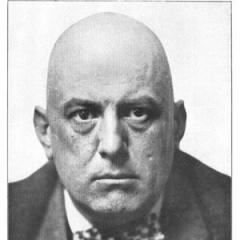
Aleister Crowley
Aleister Crowley

Aleister Crowley, a British poet, mystic, and writer, was born on October 12, 1875, and died on December 1, 1947. He is known for his poetic works and mystical practices, and is considered one of the most controversial figures of the 20th century. more

You May Also Like

“I was suffering the easily foreseeable consequences. Addiction is the hallmark of every infatuation-based love story. It all begins when the object of your adoration bestows upon you a heady, hallucinogenic dose of something you never dared to admit you wanted-an emotional speedball, perhaps, of thunderous love and roiling excitement. Soon you start craving that intense attention, with a hungry obsession of any junkie. When the drug is witheld, you promptly turn sick, crazy, and depleted (not to mention resentful of the dealer who encouraged this addiction in the first place but now refuses to pony up the good stuff anymore-- despite the fact that you know he has it hidden somewhere, goddamn it, because he used to give it to you for free). Next stage finds you skinny and shaking in a corner, certain only that you would sell your soul or rob your neighbors just to have 'that thing' even one more time. Meanwhile, the object of your adoration has now become repulsed by you. He looks at you like you're someone he's never met before, much less someone he once loved with high passion. The irony is,you can hardly blame him. I mean, check yourself out. You're a pathetic mess,unrecognizable even to your own eyes. So that's it. You have now reached infatuation's final destination-- the complete and merciless devaluation of self." - pg 20-21”

“Ma conception du voyage avait changé : la destination importe moins que l'abandon. Partir, ce n'est pas chercher, c'est tout quitter, proches, voisins, habitudes, désirs, opinions, soi-même. Partir n'a d'autre but que de se livrer à l'inconnu, à l'imprévu, à l'infinité des possibles, voire même à l'impossible. Partir consiste à perdre ses repères, la maîtrise, l'illusion de savoir et à creuser en soi une disposition hospitalière qui permet à l'exceptionnel de surgir. Le véritable voyageur reste sans bagage et sans but.”

“Rien n'est jamais acquis. En "travaillant" l'un de ses bien-aimés problèmes, fût-ce celui du velours ou de la laine, le vrai peintre bouleverse à son insu les données de tous les autres. Même quand elle a l'air d'être partielle, sa recherche est toujours totale. Au moment où il vient d'acquérir un certain savoir-faire, il s'aperçoit qu'il a ouvert un autre champ où tout ce qu'il a pu exprimer auparavant est à redire autrement. De sorte que ce qu'il a trouvé, il ne l'a pas encore, c'est encore à chercher, la trouvaille est ce qui appelle d'autres recherches. L'idée d'une peinture universelle, d'une totalisation de la peinture, d'une peinture toute réalisée est dépourvue de sens. Durerait-il des millions d'années encore, le monde, pour les peintres, s'il en reste, sera encore à peindre, il finira sans avoir été achevé.”