“Nature is man's inorganic body -- that is to say, nature insofar as it is not the human body. Man lives from nature -- i.e., nature is his body -- and he must maintain a continuing dialogue with it is he is not to die. To say that man's physical and mental life is linked to nature simply means that nature is linked to itself, for man is a part of nature.”
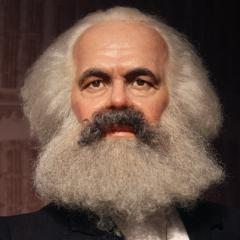
Quote by Karl Marx
Work
The Communist Manifesto: A Road Map to History's Most Important Political Document
This book is a comprehensive analysis of 'The Communist Manifesto,' a seminal work by Karl Marx and Friedrich Engels. It delves into the principles of communism, the class struggle, and the historical context in which the document was written. The book serves as an in-depth exploration of the ideas that have shaped modern political thought and movements. more
Author
You May Also Like
Source: The Karl Marx Library: On the First International
Source: Delphi Collected Works of Karl Marx (Illustrated)
“Since only what is material is perceptible, knowable, nothing is known of the existence of God.”
Source: Karl Marx: Selected Writings
Source: A World Without Jews
“The Jews of Poland are the smeariest of all races.”
Source: A World Without Jews
Source: Marx and Engels on economics, politics, and society: essential readings with editorial commentary
“A man cannot become a child again, or he becomes childish.”
Source: Marx: Later Political Writings
Source: German socialist philosophy