Quotessence
Home / Quotes / Quote by Rabindranath Tagore

Quote by Rabindranath Tagore

Work

Poems

This book is a compilation of poems that explore a wide range of subjects and emotions, showcasing the beauty and depth of the poetic form. more

Author

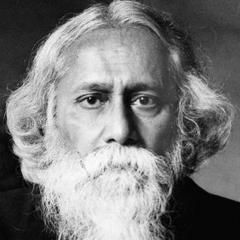
Rabindranath Tagore
Rabindranath Tagore

Rabindranath Tagore, a renowned Indian poet, writer, philosopher, and social activist, was born on May 7, 1861, in Calcutta, and passed away on August 7, 1941. Tagore's works blend the influences of traditional Indian literature and Western literature, and his poetry, novels, plays, and essays have won the hearts of readers worldwide. He was the first Asian writer to win the Nobel Prize in Literature, and his works have had a profound impact on world literature. more

You May Also Like

“The people as a body cannot deliberate. Nevertheless, they will feel an irresistible impulse to act, and their resolutions will be dictated to them by their demagogues... and the violent men, who are the most forward to gratify those passions, will be their favorites. What is called the government of the people is in fact too often the arbitrary power of such men. Here, then, we have the faithful portrait of democracy.”

“The most universal and effectual way of discovering the true meaning of law, when the words are dubious, is by considering the reason and spirit of it; or the cause which moved the legislator to enact it. for when this reason ceased, the law itself ought likewise to cease with it.”

“A man is allowed sufficient freedom of thought, provided he knows how to choose his subject properly.... But the scene is changed as you come homeward, and atheism or treason may be the names given in Britain to what would be reason and truth if asserted in China.”

“All writers on the science of policy are agreed, and they agree with experience, that all governments must frequently infringe the rules of justice to support themselves; that truth must give way to dissimulation, honesty to convenience, and humanity itself to the reigning of interest. The whole of this mystery of iniquity is called the reason of state.”

“Whatever Party of Men obtain the Reins of Management, and have power to name the Person who shall License the Press, that Party of Men have the whole power of keeping the World in Ignorance, in all matters relating to Religion or Policy, since the Writers of that Party shall have full liberty to impose their Notions upon the World.”