“When the war (WWI) finally ended it was necessary for both sides to maintain, indeed even to inflate, the myth of sacrifice so that the whole affair would not be seen for what it was: a meaningless waste of millions of lives. Logically, if the flower of youth had been cut down in Flanders, the survivors were not the flower: the dead were superior to the traumatized living. In this way, the virtual destruction of a generation further increased the distance between the old and the young, between the official and the unofficial.”
Quote by Robert Hughes
Author
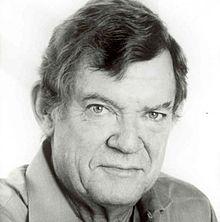
Robert Hughes
Robert Hughes (July 28, 1938 – August 6, 2012) was an Australian-born art critic, writer, and documentary filmmaker. He served as the art critic for Time magazine from 1971 to 2001, known for his sharp, passionate, and insightful commentary. Hughes authored influential books such as 'The Shock of the New,' which explored modern art history. His work often intertwined art with social and political contexts, making him one of the most prominent art critics of the 20th century. more
You May Also Like
“The new job of art is to sit on the wall and get more expensive.”
“But the existence of a cult does not mean that images appropriate to it automatically follow.”
Source: The Spectacle of Skill: New and Selected Writings of Robert Hughes
Source: The Shock of the New
“In art there is no progress, only fluctuations of intensity.”
Source: The Spectacle of Skill: New and Selected Writings of Robert Hughes
Source: The Shock of the New
“Political stress is always apt to shrink the private arena and attach it on to the public”
Source: The Shock of the New
“Landscape is to American painting what sex and psychoanalysis are to the American novel.”