Quotessence
Home / Quotes / Quote by Thomas Reid

Quote by Thomas Reid

“It is a question of fact, whether the influence of motives be fixed by laws of nature, so that they shall always have the same effect in the same circumstances.”

Quote by Thomas Reid

Work

Philosophical works

This comprehensive compilation delves into the depths of philosophical inquiry, presenting a wide array of perspectives on topics such as ethics, metaphysics, epistemology, and aesthetics. It includes seminal works from renowned philosophers across different historical periods, offering readers a rich tapestry of philosophical thought. more
Author

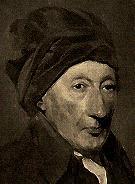
Thomas Reid
Thomas Reid

Thomas Reid (April 26, 1710 – October 7, 1796) was a Scottish philosopher and a key figure of the Scottish Enlightenment. He founded the Scottish School of Common Sense, which sought to counter David Hume's skepticism by grounding philosophy in intuitive principles of common sense. Reid studied and taught at the University of Aberdeen, later becoming Professor of Moral Philosophy at the University of Glasgow. His major works, An Inquiry into the Human Mind on the Principles of Common Sense and Essays on the Intellectual Powers of Man, argued that perception directly grasps external objects, rejecting the theory of ideas. His ideas influenced 19th-century Scottish philosophy, French spiritualism, and 20th-century analytic philosophy. more

You May Also Like

“I think the subject which will be of most importance politically is mass psychology.... Its importance has been enormously increased by the growth of modern methods of propaganda. Of these the most influential is what is called 'education.' Religion plays a part, though a diminishing one; the press, the cinema, and the radio play an increasing part.... It may be hoped that in time anybody will be able to persuade anybody of anything if he can catch the patient young and is provided by the State with money and equipment.”

“When I say that children should be told about sex, I do not mean that they should be told only the bare physiological facts; they should be told whatever they wish to know. There should be no attempt to represent adults as more virtuous than they are, or sex as occurring only in marriage. There is no excuse for deceiving children. And when, as must happen in conventional families, they find that their parents have lied, they lose confidence in them, and feel justified in lying to them.”

“The human animal, like others, is adapted to a certain amount of struggle for life [and] the mere absence of effort from his life removes an essential ingredient of happiness. [. . .] He forgets that to be without some of the things you want is an indispensable part of happiness.”

“In spite of Death, the mark and seal of the parental control, Man is yet free, during his brief years, to examine, to criticise, to know, and in imagination to create. To him alone, in the world with which he is acquainted, this freedom belongs; and in this lies his superiority to the resistless forces that control his outward life.”