“The human animal, like others, is adapted to a certain amount of struggle for life [and] the mere absence of effort from his life removes an essential ingredient of happiness. [. . .] He forgets that to be without some of the things you want is an indispensable part of happiness.”
Quote by Bertrand Russell
Work
The Conquest of Happiness
This book delves into the concepts of happiness and contentment, offering insights on how individuals can cultivate a fulfilling life. It examines various perspectives on happiness, including psychological, philosophical, and cultural factors, and provides practical advice for readers seeking to enhance their own happiness. more
Author
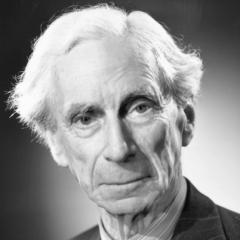
Bertrand Russell
Bertrand Russell was a British philosopher, mathematician, and logician born on May 18, 1872, and died on February 2, 1970. He is known for his contributions to logic and mathematics, particularly in the fields of mathematical logic and philosophical analysis. His works spanned a wide range of subjects, including ethics, political philosophy, history, and literary criticism. more
You May Also Like
Source: Sceptical Essays
Source: Why I Am Not a Christian
Source: Pacifism and Revolution, 1916-18
Source: Mysticism and Logic
Source: The Problems of Philosophy
Source: The Problem of China
Source: Bertrand Russell on God and Religion
Source: The Problems of Philosophy
Source: The Scientific Outlook