Quotessence
Home / Quotes / Quote by Aristotle

Quote by Aristotle

“For suppose that every tool we had could perform its task, either at our bidding or itself perceiving the need, and if-like the statues made by Dædalus or the tripods of Hephæstus, of which the poet says that "self-moved they enter the assembly of the gods" - shuttles in a loom could fly to and fro and a plectrum play a lyre all self-moved, then master-craftsmen would have no need of servants nor masters of slaves.”

Quote by Aristotle

Author
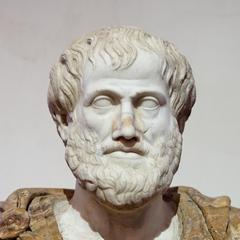
Aristotle
Aristotle

Aristotle, a renowned Greek philosopher, is one of the founders of Western philosophy. His thoughts covered a wide range of fields, including ethics, logic, politics, and had a profound impact on the world. more

You May Also Like

“We must speak first about the division of land and about those who cultivate it: who should they be and what kind of person? We do not agree with those who have said that property should be communally owned, but we do believe that there should be a friendly arrangement for its common use, and that none of the citizens should be without means of support.”

“To seek the greatest good is to live well, and to live well is nothing other than to love God with the whole heart, the whole soul, and the whole mind: It is therefore obvious that this love must be kept whole and uncorrupt, that is temperance; it should not be overcome with difficulties, that is fortitude, it must not be subservient to anything else, that is justice; it must discriminate among things so as not to be deceived by falsity or fraud, that is prudence.”

“But life cannot maintain itself alone. The Creator of life has entrusted us with the responsibility of preserving, developing, and perfecting it. In order that we may accomplish this, He has provided us with a collection of marvelous faculties. And He has put us in the midst of a variety of natural resources. By the application of our faculties to these natural resources we convert them into products, and use them. The process is necessary in order that life may run its appointed course.”

“It depends on the consent of the people to decide whether kings or consuls or other magistrates are to be established in authority over them, and if there is legitimate cause, the people can change a kingdom into an aristocracy, or an aristocracy into a democracy, and vice versa, as we read was done in Rome.”

“But if we are to retain freedom, then we can only do so by keeping the determining mass of the citizens the possessors of property with personal control over it, as individuals or as families. For property is the necessary condition of economic freedom in the full sense of that term. He that has not property is under economic servitude to him who has property, whether the possessor of it be another individual or the State.”