Quotessence
Home / Quotes / Quote by Maximus the Confessor

Quote by Maximus the Confessor

“When what has been created in time according to the temporal order has reached maturity, it ceases from natural growth. But when what has been brought about by the knowledge of God through the practice of the virtues has reached maturity, it starts to grow anew. For the end of one stage constitutes the starting point of the next.”

Quote by Maximus the Confessor

Author
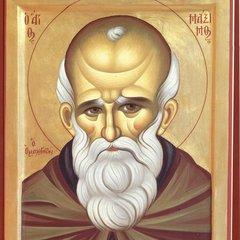
Maximus the Confessor

Maximus the Confessor, who lived from 580 to August 13, 662, was a mysterious religious philosopher and theologian. His life and achievements are not well-documented in historical records, but his thoughts have had a profound impact on Christian philosophy. more

You May Also Like

“If... Adam had trusted in God and been nourished from the tree of life (Gn. 2:9)? he would not have set aside the immortality that had been granted. For such immortality is eternally preserved by participation in life, since all life is genuine and preserved by appropriate food. The food of that blessed life is 'the bread that came down from heaven and gives life to the world' (Jn. 6:33), just as the inerrant Word Himself declares about Himself in the Gospels.”

“No benefit comes from a just man's prayer if he who asks for it finds more pleasure in sin than in virtue. For Samuel mourned over Saul when he sinned, but he was not able to obtain God's mercy, for his grief was not supported by the necessary change of life on the part of the sinner. Hence God put an end to the pointless grief of His servant, saying to him, 'How long will you mourn for Saul, seeing I have rejected him from reigning over Israel?' (I Sam. 16:1).”

“... for our sake loosing within Himself the bonds of bodily birth, He granted us through spiritual birth, according to our own volition, power to become children of God instead of children of flesh and blood if we have faith in His Name (cf. Jn. 1:12-13). For the Savior the sequence was, first of all, incarnation and bodily birth for my sake; and so thereupon the birth in the Spirit through baptism, originally spurned by Adam, for the sake of my salvation and restoration by grace, or, to describe it even more vividly, my very remaking.”

“When a man's intellect is constantly with God, his desire grows beyond all measure into an intense longing for God and his incensiveness is completely transformed into divine love. For by continual participation in the divine radiance his intellect becomes totally filled with light; and when it has reintegrated its passible aspect, it redirects this aspect towards God, filling it with an incomprehensible and intense longing for Him and with unceasing love, thus drawing it entirely away from worldly things to the divine.”

“The patient endurance of the saints exhausts the evil power that attacks them, since it makes them glory in sufferings undergone for the sake of the truth. It teaches those too much concerned with a life in the flesh to deepen themselves through such sufferings instead of pursuing ease and comfort; and it makes the flesh's natural weakness in the endurance of suffering a foundation for overwhelming spiritual power. For the natural weakness of the saints is precisely such a foundation, since the Lord has made their weakness stronger than the proud devil.”

“Without the power of intelligence there is no capacity for spiritual knowledge; and without spiritual knowledge we cannot have the faith from which springs that hope whereby we grasp things of the future as though they were present. Without the power of desire there is no longing, and so no love, which is the issue of longing; for the property of desire is to love something. And without the incensive power, intensifying the desire for union with what is loved, there can be no peace, for peace is truly the complete and undisturbed possession of what is desired.”