Quotessence
Home / Quotes / Quote by Imran Khan

Quote by Imran Khan

“It's more important to try to do something for the crores of poor people of my country.”

Quote by Imran Khan

Author
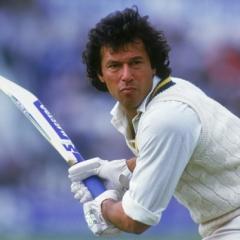
Imran Khan
Imran Khan

Imran Khan is a notable Pakistani politician and former cricket player. He is the founder and leader of the Pakistan Tehreek-e-Insaf (PTI) party, which has gained considerable popularity in Pakistan for its promises of social and economic reforms. Born on November 25, 1952, Khan began his career as a cricket player, achieving international acclaim as the captain of the Pakistani cricket team. After retiring from cricket, he shifted his focus to politics and established the PTI in 1996. Over the years, he has been a vocal advocate for change in Pakistan, addressing issues such as corruption, poverty, and education. Khan's political career has included several key achievements. He served as the Prime Minister of Pakistan from 2018 to 2022, implementing policies aimed at improving the country's economy and social welfare. His tenure was characterized by efforts to combat corruption, promote transparency, and invest in infrastructure. Khan is also recognized for his philanthropic work, particularly through the Shaukat Khanum Memorial Cancer Hospital and Research Centre, which he founded in 1994. Khan's leadership style and policies have been both lauded and criticized. His supporters praise his commitment to social justice and his efforts to reform the political system. Critics, however, argue that his government faced challenges in implementing effective policies and managing the country's economic and security issues. Despite the controversies, Khan remains a significant figure in Pakistani politics, with a strong following and a vision for the country's future. more

You May Also Like

“In the domain of pharmaceuticals, we need a metric for health impact, and with this metric we can then assess the value of the introduction of a new product and pay its innovator accordingly, say on the basis of the product's measured health impact during its first ten years on the market. In exchange, innovators must of course renounce the usual rewards they are otherwise entitled to, namely the patent-protected markup on the price of their product.”

“With the Health Impact Fund, the innovation is paid for separately, through publicly funded health impact rewards, and the product is sold at the cost of production to all. Here, the cruel injustice of preventing the poor from buying at cost - evidenced by today's suppression of the trade in generic versions of patented medicines - would no longer be needed.”

“You can think of the Health Impact Fund as a mechanism that would keep the benefits and burdens of pharmaceutical innovation for the affluent roughly as they are while massively reducing the burdens presently imposed upon the poor. This sounds like magic. But it really works because the current system is not Pareto efficient. It's a system that generates hundreds of billions of dollars in litigation costs and deadweight losses that HIF-registered medicines would sidestep. By avoiding these losses, the HIF reform can bring improvements all around - including for pharmaceutical innovators.”

“Companies are actually much better than governments and other bureaucracies at organizing in a holistically efficient way the extremely complex path from the examination of molecules all the way to the delivery of medicines to patients. Already in the conception and selection of research projects, companies would anticipate all the challenges down the line that they will need to overcome in order to achieve actual health impact. Bureaucratic organizations, by contrast, are notoriously bad at this sort of optimizing.”

“To improve global health, it's not enough just to have a really good new product and to obtain marketing approval. You still need to market the product and bring it to patients, follow up, create the infrastructure, and so on - the whole pipeline, the network. That's something that companies are extremely good at: organizing a whole pipeline in a cost-effective way.”