Quotessence
Home / Quotes / Quote by Joseph Addison

Quote by Joseph Addison

“I believe that everyone, some time or other, dreams that he is reading papers, books, or letters; in which case the invention prompts so readily that the mind is imposed upon, and mistakes its own suggestions for the composition of another.”

Quote by Joseph Addison

Work

The spectator

The Spectator is a renowned publication known for its insightful essays and social commentary. It was established in the 18th century and has since become a significant part of English literature, offering readers a glimpse into the cultural and intellectual climate of its time. more

Author

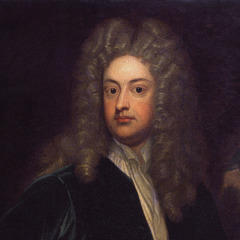
Joseph Addison
Joseph Addison

Joseph Addison, born on May 1, 1672, and died on June 17, 1719, was an influential English essayist, dramatist, and poet. He is known for his elegant prose style and his co-authorship of the magazine 'The Spectator' with Richard Steele. more

You May Also Like

“A statue lies hid in a block of marble, and the art of the statuary only clears away the superfluous matter and removes the rubbish. The figure is in the stone; the sculptor only finds it. What sculpture is to a block of marble, education is to a human soul. The philosopher, the saint, or the hero,--the wise, the good, or the great man,--very often lies hid and concealed in a plebeian, which a proper education might have disinterred, and have brought to light.”

“There is not a more melancholy object than a man who has his head turned with religious enthusiasm.”

“Nature has laid out all her art in beautifying the face; she has touched it with vermilion, planted in it a double row of ivory, made it the seat of smiles and blushes, lighted it up and enlivened it with the brightness of the eyes, hung it on each side with curious organs of sense, given it airs and graces that cannot be described, and surrounded it with such a flowing shade of hair as sets all its beauties in the most agreeable light.”

“Were a man's sorrows and disquietudes summed up at the end of his life, it would generally be found that he had suffered more from the apprehension of such evils as never happened to him than from those evils which had really befallen him.”