“I think it must be lonely to be God. Nobody loves a master. No.”
Quote by Gwendolyn Brooks
Work
The Essential Gwendolyn Brooks
This volume gathers representative works from across Gwendolyn Brooks's celebrated career, spanning from her early formal verse to her later free-form explorations of urban Black life. The collection reflects her evolution as a poet who chronicled the experiences of ordinary people in Chicago's South Side with precision and empathy. Brooks's work is recognized for its technical mastery, its unflinching social observation, and its expansion of American poetry's subject matter and voice. The Essential Gwendolyn Brooks serves as an introduction to her substantial contribution to twentieth-century American literature, presenting poems that address themes of racial identity, community, struggle, and resilience without relying on biographical speculation or critical interpretation beyond what is established in public record. more
Author
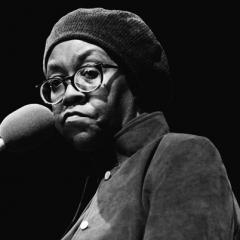
Gwendolyn Brooks
Gwendolyn Brooks was a prominent American poet whose work delved into the African American experience. Born on June 7, 1917, in Topeka, Kansas, she spent much of her life in Chicago, Illinois. Brooks' poetry frequently depicted the struggles and victories of the African American community, and she became the first African American to win the Pulitzer Prize for Poetry in 1950 for her collection 'Annie Allen'. She passed away on December 3, 2000. more
You May Also Like
“Life for my child is simple, and is good.”
Source: The world of Gwendolyn Brooks
“By different methods different men excel, but where is he who can do all things well?”
Source: The poetical works of Charles Churchill: with memoir, critical dissertation, and explanatory notes / by the Rev. George Gilfillan
“All hunt for fame, but most mistake the way.”
Source: The Rosciad ... The eighth edition. With large additions. To which is added, The Smithfield Rosciad
Source: Selected Writings