“It is not truly realistic or scientific to take short views, to sacrifice the future to immediate pressure, to ignore facts and forces that are disagreeable and to magnify the enduring quality of whatever falls in with immediate desire. It is false that the evils of the situation arise from absence of ideals; they spring from wrong ideals.”
Quote by John Dewey
Work
The Middle Works, 1899-1924: 1920
This volume includes a selection of essays, articles, and other writings that showcase the author's intellectual and creative pursuits during the early 20th century. more
Author
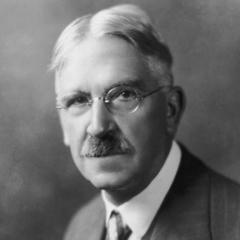
John Dewey
John Dewey was an American philosopher and educator, born on October 20, 1859, and died on June 1, 1952. He was a leading figure in the philosophy of pragmatism and had a profound impact on 20th-century education, philosophy, and the social sciences. more
You May Also Like
Source: The Middle Works, 1899-1924: 1920
Source: A Stubbornly Persistent Illusion: The Essential Scientific Works of Albert Einstein
“[Emerson] was interested not in the bookworm, not even in the thinker, only in Man Thinking.”
“If death is the end of everything, then living is everything.”