Quotessence
Home / Quotes / Quote by Philip Kitcher

Quote by Philip Kitcher

“Sometime during the 1990s, when I was teaching philosophy at UCSD, my friend, colleague, and music teacher, Carol Plantamura, discussed the possibility of teaching a course together looking at ways in which various literary works (plays, stories, novels) had been treated as operas, and how different themes emerged in the opera and in its original. One of the pairings we planned to use was Mann's great novella and Britten's opera. Unfortunately, the course was never taught, but the idea remained with me.”

Quote by Philip Kitcher

Author
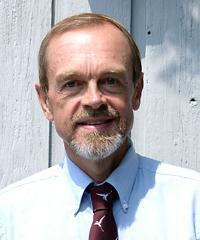
Philip Kitcher
Philip Kitcher

Philip Kitcher, born on February 20, 1947, is a philosopher, writer, and academic. His research interests are primarily in the fields of philosophy of science, epistemology, and moral philosophy. more

You May Also Like

“First, my frame of reference for the Britten opera shifted. I'd always thought of Britten's approach in Death in Venice as another exploration of the plight of the individual whose aspirations are at odds with those of the surrounding community: his last opera returning to the themes of Peter Grimes. As I read and listened and thought, however, Billy Budd came to seem a more appropriate foil for Death in Venice.”

“Presenting Aschenbach as a composer - based on Mahler - leads to some dreadful scenes (especially those in which Aschenbach is berated by his student), and it surely distorts the character Mann created. Yet, we know that Mann's novella was based on a holiday in Venice he took with his wife and brother, and that while he was there he followed the reports in the German newspapers, describing the dying Mahler's progress as he returned from New York to Vienna.”

“I found a deep kinship between Mahler's recurrent attempts to confront all sides of life and to affirm himself in the face of his own finitude, and Aschenbach's dedication to persevere in the literary evocation of beauty. Exploring this kinship led me to reflect on many of Mahler's songs and symphonies - and particularly his great masterpiece, Das Lied von der Erde. The end result was a way of reading Mann that I hadn't originally anticipated at all.”

“I intend Deaths in Venice to contribute both to literary criticism and to philosophy. But it's not "strict philosophy" in the sense of arguing for specific theses. As I remark, there's a style of philosophy - present in writers from Plato to Rawls - that invites readers to consider a certain class of phenomena in a new way. In the book, I associate this, in particular, with my good friend, the eminent philosopher of science, Nancy Cartwright, who practices it extremely skilfully.”

“I would like to undermine the stereotype of "strict philosophy." J.L. Austin remarked that, when philosophy is done well, it's all over by the bottom of the first page. I take him to have meant that the real work comes in setting up the problem with which you are dealing, and thus getting your reader to take particular things for granted.”