Quotessence
Home / Quotes / Quote by Stephen King

Quote by Stephen King

“When we blew the first atomic bomb at White Sands near the end of the war, nobody knew what was going to happen. There was a theory that the chain reaction would continue forever. And we would have created a little tiny sun out there in the desert that would burn until the end of the universe. It wasn't a widely held theory but it was a theory that nobody had a way of disproving. There were people who thought it wouldn't go off at all, that it would simply sit out there and melt and produce a great big dirty cloud of radioactivity. Nobody knew.”

Quote by Stephen King

Author
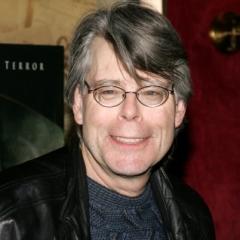
Stephen King
Stephen King

Stephen King, born on September 21, 1947, is a renowned American author. His works primarily focus on horror, fantasy, and science fiction, and have won him a wide audience. King has received numerous literary awards in the United States, including the Edgar Allan Poe Award and the World Fantasy Award. more

You May Also Like

“I spend a lot of time parenting because I'm home. A friend of mine told me that the average father sees each kid an average of twenty-two minutes a week, which I found almost unbelievable. Mine are in my hip pocket all the time. And I like it that way.”

“When I knew I was going to be able to write full time, I wondered, "What's going to happen to the relationships within my family?" Are they going to change? Is it going to be the kind of deal where you say, "I can't take this! Get me out of here! I can't stand these screaming kids!" The way it turned out was, I was able to change the diapers okay, after I stuck the pin through my fingers a few times. I had a dawning realization that children are not particularly hard to deal with.”

“Disney cartoons are all rated G. It's really funny. There are kids all over the world who still have complexes over Bambi's father getting shot by the hunter and Bambi's mother getting crisped. But that's the way it's always been. This is the sort of material that appeals to kids. Kids understand it instinctively. They grip it.”

“We live in a society now where the sexual taboo for children has really passed by the wayside. Any nineyear-old can go into a 7-11 and check out the Playmate of the Month, but you don't want your kids to know about death. You don't want your kids to know about disfigurement. You don't want 'em to know about creepy things because it might warp their little minds.”

“Little kids' minds are very, very strong. They bend. There's a lot of tensile strength and they don't break. We start our kids off on things like "Hansel and Gretel," which features child abandonment, kidnapping, attempted murder, forcible detention, cannibalism, and finally murder by cremation. And the kids love it.”

“I've always thought it would be fun to update "Hansel and Gretel." I'd have these white parents in the suburbs with an income of fifty or sixty thousand dollars. Daddy loses his job, and the wicked stepmother says, "We could get along, we could keep our Mastercharge, if you'd just get rid of those shitty kids." Finally the father hires a limo and tells the driver, "Drop 'em off on Lenox Avenue in Harlem at two in the morning." These two little white kids land there. They're menaced. And this supposedly nice black lady says, "Would you like some candy?"”

“Kids know they can't make it alone, yet at the same time, built into each one of us, is a survival ethic. It says, "Nobody cares and you have to look out for yourself and if you don't, you'll die." These two things work against each other. I think most kids are very frightened of their parents, and that's what all fairy tales reflect: Parents will fail you and you'll be left on your own. But, of course, everything comes out right in the end and the parents take you back.”

“The one thing about kids is that you never really know exactly what they're thinking or how they're seeing. After writing about kids, which is a little bit like putting the experience under a magnifying glass, you realize you have no idea how you thought as a kid. I've come to the conclusion that most of the things that we remember about our childhood are lies. We all have memories that stand out from when we were kids, but they're really just snapshots. You can't remember how you reacted because your whole head is different when you stand aside.”