Quotessence
Home / Quotes / Quote by Richard E. Byrd

Quote by Richard E. Byrd

“Below -60° cold will find the last microscopic touch of oil in an instrument and stop it dead. If there is the slightest breeze, you can hear your breath freeze as it floats away, making a sound like that of Chinese firecrackers. As does the morning dew, rime coats every exposed object. And if you work too hard and breathe too deeply, your lungs will sometimes feel as if they were on fire.”

Quote by Richard E. Byrd

Work

Alone: The Classic Polar Adventure

This book recounts the harrowing tale of a solitary polar explorer facing extreme conditions and personal challenges during an epic journey. more

Author
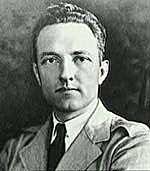
Richard E. Byrd
Richard E. Byrd

Richard E. Byrd was an American naval officer and explorer, renowned for his polar expeditions. Born on October 25, 1888, and passing away on March 11, 1957, Byrd conducted several expeditions to Antarctica in the 1930s and 1940s, becoming the first person to reach the South Pole alone. more

You May Also Like

“What I had not counted on was discovering how closely a man could come to dying and still not die, or want to die. That, too, was mine; and it also is to the good. For that experience resolved proportions and relationships for me as nothing else could have done; and it is surprising, approaching the final enlightenment, how little one really has to know or feel sure about.”

“What people think about you is not supposed to matter much, so long as you yourself know where the truth lies; but I have found out, as have others who move in and out of newspaper headlines, that on occasion it can matter a good deal. For once you enter the world of headlines you learn there is not one truth but two: the one which you know from the facts; and the one which the public, or at any rate a highly imaginative part of the public, acquires by osmosis.”

“I am unable, when I turn to myself, to recognize any of my faculties or my capacities. The inner sensation which I have of myself informs me that I am, that I think, that I will, that I have sensory awareness, that I suffer, and so on; but it provides me with no knowledge whatever of what I am - of the nature of my thought, my sensations, my passions, or my pain - or the mutual relations that obtain between all these things ... I have no idea whatever of my soul.”