Quotessence
Home / Quotes / Quote by Banana Yoshimoto

Quote by Banana Yoshimoto

“I thought about the complications of what I'd been dealing lately. And then I understood that actually it wasn't just the relationship- I had so much baggage from my chilhood, from before I was born into this world too. I understood that for the first time that night. And I knew it would always be that way, until we die. Even after we're dead.”

Quote by Banana Yoshimoto

Book:Lizard

Work

Lizard

This book follows the journey of a lizard as it navigates its environment and encounters various challenges. more

Author

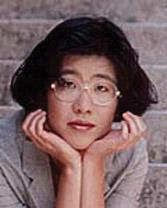
Banana Yoshimoto
Banana Yoshimoto

Banana Yoshimoto is a Japanese writer celebrated for her minimalist and introspective style. Born on July 24, 1964, she gained prominence in the 1990s with her novel 'Kitchen'. Yoshimoto's works often delve into themes of loneliness, youth, and the complexities of human relationships. more

You May Also Like

“There is a new trend among authors to thank every famous people for inspiration, non-existent assistance, and/or some casual reference to the author’s work. Authors do this to pump themselves up. So, on the off chance that this is helpful, I wish to thank the following people: the Prime Minister of India for promoting literacy; Dr APJ Abdul Kalam, who called me up one day and said, “Hey, you’re a good writer”; Kabir Das, who inspired me to write about love; Shahrukh Khan, who is an awesome actor; and last but not least, President of India, who once waved to me in New Delhi as the convoy moved from the streets to the Rashtrapati Bhavan Building, screwing up traffic for half an hour, thereby forcing me to kill time by thinking of a great plot to write this book.”

“Editing a written text is a collaborative enterprise that commences with the other parties commenting up the author’s initial ideas and it can include technical assistance in correction of grammatical mistakes, misspellings, poorly structured sentences, vague or inconsistent statements, and correcting errors in citations. Editing is as much as an art form as writing a creative piece of literature. A good editor is a trusted person whom instructs the writer to speak plainly and unabashedly informs the writer when they write absolute gibberish. Perhaps the most successful relationship between a writer and an editor is the storied relationship shared by Thomas Wolfe and his renowned editor, Maxwell Perkins. By all accounts, the prodigiously talented and mercurial Wolfe was hypersensitive to criticism. Perkins provided Wolfe with constant reassurance and substantially trimmed the text of his books. Before Perkins commenced line editing and proofreading Wolfe’s bestselling autobiography Look Homeward, Angel,’ the original manuscript exceeded 1,100 pages. In a letter to Maxwell Perkins, Thomas Wolfe declared that his goal when writing “Look Homeward, Angel,” was “to loot my life clean, if possible of every memory which a buried life and the thousand faces of forgotten time could awaken and to weave it into a … densely woven web.” After looting my own dormant memories by delving into the amorphous events that caused me to lose faith in the world and assembling the largely formless mulch into a narrative manuscript of dubious length, I understand why a writer wishes to thank many people for their assistance, advice, and support in publishing a book.”

“While much of this book appears to be about zombies, it is in fact an ode to the lessons that are learned from such personal tragedies. It is an ode to the scientists who took the time to get to know their patients well enough to understand the complex ailments that impacted their everyday lives. It is an ode to those who, often by no fault of their own, suffered from a malady and yet endured to allow a stranger in a white coat to ask "why" and "how.”

“By acknowledging how ridiculous something is, people know what’s real again. We need those refreshers. It’s amazing how out of touch people can be when pretending there’s no elephant in the room. People must be elephant finders. But not of those big, monstrous, disgusting elephants, but the cute tiny ones in the room that we were each privately suspecting.”