“What is it about the relationship of a mother that can heal or hurt us? Her womb is the first landscape we inhabit. It is here we learn to respond - to move, to listen, to be nourished and grow. In her body we grow to be human as our tails disappear and our gills turn to lungs. Our maternal environment is perfectly safe - dark, warm, and wet. It is a residency inside the Feminine. When we outgrow our mother's body, our cramps become her own. We move. She labors. Our body turns upside down in hers as we journey through the birth canal. She pushes in pain. We emerge, a head. She pushes one more time, and we slide out like a fish. Slapped on the back by the doctor, we breath. The umbilical cord is cut - not at our request. Separation is immediate. A mother reclaims her body, for her own life. Not ours. Minutes old, our first death is our own birth.”
Quote by Terry Tempest Williams
Work
Refuge: An Unnatural History of Family and Place
This book delves into the intricate connections between family dynamics and the landscapes they inhabit, analyzing how natural and human-induced changes affect the stability and identity of communities. more
Author
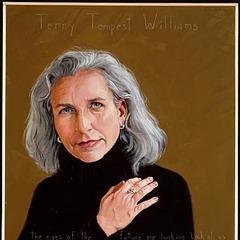
Terry Tempest Williams
Terry Tempest Williams is an American author known for her profound insights into the relationship between humans and nature. Her works often explore themes such as environmental protection, feminism, and identity. more
You May Also Like
Source: Daily Drive 365
Source: The Hotel of Irrevocable Acts
“A goddess of dawn scooted under a zing of barbed wire to witness your birth.”
Source: The Chameleon Couch
Source: A Blue One
“Все мы из воды вышли (Мелькиадес, «Сто лет одиночества», Г.Г. Маркес)”
Source: One Hundred Years of Solitude