Quotessence
Home / Quotes / Quote by Anton Chekhov

Quote by Anton Chekhov

Author

Anton Chekhov
Anton Chekhov

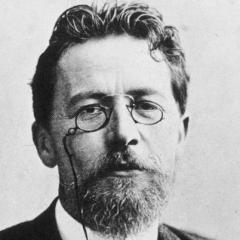
Anton Chekhov, born on January 29, 1860, was a prominent Russian physician and short story writer. His works are renowned for their profound psychological insights and critical portrayal of social realities. Chekhov's short stories have had a profound impact on literature both in Russia and around the world. more

You May Also Like

“There are two ways suffering can change you. The first is by breaking you down, leaving you afraid, paranoid, and void of hope. The other is by breaking you open, leaving you with a wider heart, and expanding your capacity for love. Jesus, in his suffering, was broken open for us. When we share in Christ’s sufferings, we too are broken open and able to love others more than we could before. Because of the suffering you have endured in the past, you are able to persevere and endure even more suffering in the future. Each season of suffering prepares you for the next one. As you persevere in suffering, you become more resilient in the face of trials.”

“In submitting to suffering, Jesus absorbs and transforms it into our salvation. Hanging on the cross, the sky went black, and Jesus absorbed the darkness of the world into his body and spirit. Overtaken by it, he lay in the grave for three days. On Easter morning, he was raised in victory over death, defeating the darkness that overtook him on the cross with the light of life. This is what it means to persevere. While suffering is the result of the evil and brokenness of the world, we, like Christ, absorb the darkness of suffering into our bodies, transform it, and release it back into the world as light. We absorb hate and release it back into the world as love. We absorb lies and release them back into the world as truth. We absorb death and release it back into the world as life. We don’t see ourselves as simply victims of suffering but as agents of transformation who mock death and scorn shame, knowing that God’s victorious rule and reign over all evil will be made manifest through our perseverance.”

“I consulted a trauma expert who travels to communities devastated by natural disasters. When she meets with suffering people, she often asks this question, “Where are you feeling the pain in your body?” She wants to know if they want to talk about their emotions or if they need to talk about what’s happening physically to them. I used this advice when I recently met with a grieving friend. I wasn’t sure what to ask her, so I sat with her, cried, and then asked, “How are you feeling the grieving in your body?” She loved the question. Nobody had ever asked her this, and she wanted to talk about all the trembling and nausea she was feeling.”

“Many of us want one of the other events: we want to be part of a political revolution, a scientific discovery, an artistic innovation, and - because our society tells us that this is the event that in the end makes up for all our misery - we want to fall deeply in love and stay so. Suffering, in turn, is not an event that any of us want. Unfortunately, it is probably the one that many of us are more likely to experience than any of the others. As tempting as it is to try to offer a more sanguine conclusion to the distilliation of ideas that this book has attempted to accomplish, I cannot end on a polite lie. I know that if falling in love is an event, losing that love is no less so.”