Quotessence
Home / Quotes / Quote by Mother Teresa

Quote by Mother Teresa

Work

My Life for the Poor

This book delves into the personal journey of the author, highlighting their commitment and experiences in aiding those in poverty. more
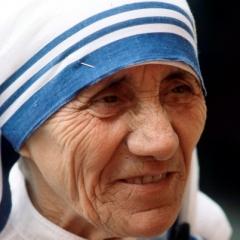
Author

Mother Teresa
Mother Teresa

Mother Teresa, born Anjeze Gonxhe Bojaxhiu, was one of the most renowned religious figures of the 20th century. Born on August 26, 1910, in Albania, she passed away on September 5, 1997. She was the founder of the Missionaries of Charity in Calcutta, India, and is known for her selfless care for the poor and the sick. Mother Teresa was awarded the Nobel Peace Prize in 1979 and was canonized as a saint. more

You May Also Like

“Of course, there is nothing new about this kind of civil disobedience. It was seen sublimely in the refusal of Shadrach, Meshach and Abednego to obey the laws of Nebuchadnezzar because a higher moral law was involved. It was practiced superbly by the early Christians who were willing to face hungry lions and the excruciating pain of chopping blocks, before submitting to certain unjust laws of the Roman empire.”

“Men are not to be told anything they might find too painful; the secret depths of human nature, the sordid physicalities, might overwhelm or damage them. For instance, men often faint at the sight of their own blood, to which they are not accustomed. For this reason you should never stand behind one in the line at the Red Cross donor clinic.”

“Said one oyster to a neighboring oyster, "I have a very great pain within me. It is heavy and round and I am in distress." And the other oyster replied with haughty complacence, "Praise be to the heavens and to the sea, I have no pain within me. I am well and whole both within and without." At that moment a crab was passing by and heard the two oysters, and he said to the one who was well and whole both within and without, "Yes, you are well and whole; but the pain that your neighbor bears is a pearl of exceeding beauty."”

“It is very tempting to take the side of the perpetrator. All the perpetrator asks is that the bystander do nothing. He appeals to the universal desire to see, hear, and speak no evil. The victim, on the contrary, asks the bystander to share the burden of pain. The victim demands action, engagement, and remembering.”

“Ease would recant Vows made in pain, as violent and void.”