“In the progress of politics, as in the common occurrences of life, we are not only apt to forget the ground we have travelled over, but frequently neglect to gather up experiences as we go.”
Quote by Thomas Paine
Work
Brief sketch of the life of Thomas Paine. Common sense. Epistle to Quakers. The crisis. Public good. Letter to the Abbe Raynal. Dissertations on government, the affairs of the bank, and paper money. Miscellaneous
The book features Paine's influential essays and letters, including his seminal work 'Common Sense,' which played a significant role in the American Revolution. It also includes his 'Brief sketch of the life of Thomas Paine,' 'Epistle to Quakers,' 'The crisis,' 'Public good,' 'Letter to the Abbe Raynal,' and 'Dissertations on government, the affairs of the bank, and paper money.' These writings showcase Paine's ideas on governance, economics, and social issues. more
Author
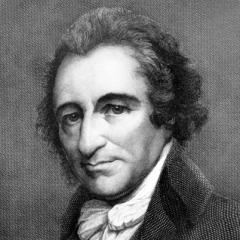
Thomas Paine
Thomas Paine, born on February 9, 1737, and died on June 8, 1809, was a prominent American writer, political figure, and philosopher during the American Revolutionary War. He is renowned for his radical democratic ideas and his contributions to the American independence movement. more
You May Also Like
Source: THE AGE OF REASON - Investigation of True and Fabulous Theology (Including
“Once one's up against it, the precise manner of one's death has obviously small importance.”
Source: Collected fiction
Source: One man's initiation: 1917: a novel