Quotessence
Home / Quotes / Quote by Errico Malatesta

Quote by Errico Malatesta

“Intolerance of oppression, the desire to be free and develop one personality to its full limits, is not enough to make one an anarchist. That aspiration towards unlimited freedom, if not tempered by a love for mankind and by the desire that all should enjoy equal freedom, may well create rebels who soon become exploiters and tyrants.”

Quote by Errico Malatesta

Work

Life and Ideas: The Anarchist Writings of Errico Malatesta

This book compiles a selection of Errico Malatesta's writings, which delve into the principles and philosophy of anarchism. It includes his thoughts on social organization, revolution, and the role of the individual in a stateless society. more

Author
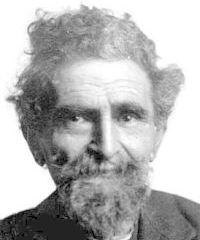
Errico Malatesta
Errico Malatesta

Errico Malatesta was an Italian anarchist philosopher, writer, and activist. Born on December 14, 1853, in Recanati, Italy, he was a prominent figure in the anarchist movement. His work focused on the principles of anarchism, advocating for a society without authority and state. Malatesta was a key figure in the development of anarchist theory and practice, influencing many later anarchists. He passed away on July 22, 1932. more

You May Also Like

“The basic function of the government everywhere in all times, whatever title it adopts and whatever its origin and organisation may be, is always that of oppressing and exploiting the masses, of defending the oppressors and the exploiters: and it's principal, characteristic and indispensable instruments are the police agent and the tax-collector, the soldier and the gaoler - to whom must be invariably added the trader in lies, be he priest of schoolmaster, remunerated or protected by the government to enslave minds and make them docilely accept the yoke.”

“The question may seem embarrassing, but it can be answered in a few words. For two people to live in peace they must both want peace; if one of them insists on using force to oblige the other to work for him and serve him, then the other, if he wishes to retain his dignity as a man and not be reduced to abject slavery, will be obliged in spite of his love of peace, to resist force with adequate means.”

“The object of a comedy is not to correct morals or ridicule the vices of society; no, a comedy should depict the discrepancies between life and purpose, should be the fruit of bitter indignation aroused by the degradation of human dignity, should be sarcasm, and not an epigram, convulsive laughter and not an amused grin, should be written with bile and not diluted salt, in a word, it should embrace life in its highest significance.”

“But in this world of morally-warped phenomena there are rare and happy exceptions of truly great magnitude, which always pay dearly for their exclusiveness and fall a prey to their own superiority. Natures of genius, themselves unaware of their genius, they are relentlessly killed by an unconscious society as an expiatory sacrifice to its own sins … Such is Pushkin’s Tatiana.”

“The Revolutionist is a doomed man. He has no private interests, no affairs, sentiments, ties, property nor even a name of his own. His entire being is devoured by one purpose, one thought, one passion - the revolution. Heart and soul, not merely by word but by deed, he has severed every link with the social order and with the entire civilized world; with the laws, good manners, conventions, and morality of that world. He is its merciless enemy and continues to inhabit it with only one purpose - to destroy it.”

“The only form of revolution beneficial to the people is one which destroys the entire state to the roots and exterminates all the state traditions, institutions and classes…. Day and night [the revolutionary] must have but one thought, one aim – merciless destruction…for him morality is everything which contributes to the triumph of the revolution. Immoral and criminal is everything that stands in its way.”