Quotessence
Home / Quotes / Quote by D. H. Lawrence

Quote by D. H. Lawrence

Work

Complete Poems by Lawrence: Easyread Super Large 24pt Edition

The "Complete Poems by Lawrence: Easyread Super Large 24pt Edition" is a compilation of the poet Lawrence's works. This edition is notable for its large print size, which is 24 points, making it accessible to readers who require larger text for comfortable reading. The poems are presented in their original language and style, providing a rich and full-bodied reading experience. This collection is intended for a wide audience, including those with visual impairments and those who simply prefer the comfort of larger print. The book does not include any additional commentary or annotations, focusing solely on the poems themselves. more

Author
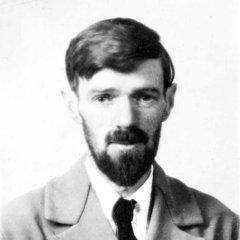
D. H. Lawrence
D. H. Lawrence

D. H. Lawrence was an English novelist and poet, born on September 11, 1885, and died on March 2, 1930. He is recognized for his distinctive prose style and his exploration of complex human relationships, particularly in the context of modernity and industrialization. His works often deal with themes of love, sex, and the struggle for individuality. more

You May Also Like

“When science, art, literature, and philosophy are simply the manifestation of personality, they are on a level where glorious and dazzling achievements are possible, which can make a man's name live for thousands of years. But above this level, far above, separated by an abyss, is the level where the highest things are achieved. These things are essentially anonymous.”

“When the aggregate amount of solid matter transported by rivers in a given number of centuries from a large continent, shall be reduced to arithmetical computation, the result will appear most astonishing to those...not in the habit of reflecting how many of the mightiest of operations in nature are effected insensibly, without noise or disorder.”

“When we say 'science' we can either mean any manipulation of the inventive and organizing power of the human intellect: or we can mean such an extremely different thing as the religion of science, the vulgarized derivative from this pure activity manipulated by a sort of priestcraft into a great religious and political weapon.”

“You look at science (or at least talk of it) as some sort of demoralising invention of man, something apart from real life, and which must be cautiously guarded and kept separate from everyday existence. But science and everyday life cannot and should not be separated. Science, for me, gives a partial explanation for life. In so far as it goes, it is based on fact, experience and experiment.”

“[Concerning] the usual contempt with which an orthodox analytic group treats all outsiders and strangers ... I urge you to think of the young psychoanalysts as your colleagues, collaborators and partners and not as spies, traitors and wayward children. You can never develop a science that way, only an orthodox church.”