Quotessence
Home / Quotes / Quote by Gottlob Frege

Quote by Gottlob Frege

Work

Translations from the Philosophical Writings of Gottlob Frege

Translations from the Philosophical Writings of Gottlob Frege is a collection that offers English-speaking readers access to the original philosophical works of Gottlob Frege. The book includes translations of his essays and lectures, which are foundational in the fields of logic, mathematics, and philosophy of language. Frege's work is known for its clarity and rigor, and this volume aims to make his ideas more accessible to contemporary readers. more

Author
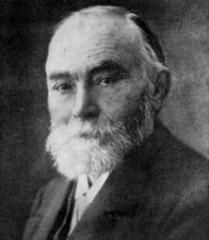
Gottlob Frege
Gottlob Frege

Gottlob Frege (November 8, 1848 - July 26, 1925) was a German mathematician, logician, and philosopher. He is considered one of the founders of modern logic and his work has had a profound impact on mathematics, logic, and philosophy. more

You May Also Like

“It is possible, of course, to operate with figures mechanically, just as it is possible to speak like a parrot: but that hardly deserves the names of thought. It only becomes possible at all after the mathematical notation has, as a result of genuine thought, been so developed that it does the thinking for us, so to speak.”

“'Imagine a person whose memory could not retain what the word 'pain' meant-so that he constantly called different things by that name-but nevertheless used the word in a way fitting in with the usual symptoms and presuppositions of pain'-in short he uses it as we all do. Here I should like to say: a wheel that can be turned though nothing else moves with it, is not part of the mechanism.”

“...monetary exchanges have interesting things in common; Gresham's law, if true, says what one of these interesting things is. But what is interesting about monetary exchanges is surely not their commonalities under physical description. A natural kind like a monetary exchange could turn out to be co-extensive with a physical natural kind; but if it did, that would be an accident on a cosmic scale.”

“There are lots of cases where we know more about how the world works than we do about how we know how it works. That's no paradox. Understanding the structure of galaxies is one thing, understanding how we understand the structure of galaxies is quite another. There isn't the slightest reason why the first should wait on the second and, in point of historical fact, it didn't. This bears a lot of emphasis; it turns up in philosophy practically everywhere you look.”