Quotessence
Home / Quotes / Quote by Ishmael Reed

Quote by Ishmael Reed

“What I can't understand why Blacks can't achieve royal status when it comes to forms that they have largely created? I mean there's a White King of Rock n' Roll, there's a White King of Jazz, how come we can never achieve titles of royalty in these fields we are supposed to prevail in? They held a so called Rock and Roll Hall of Fame the other night, where White judges credit people who resemble them with the invention of Rock and Roll. I didn't even see Blacks in the audience.”

Quote by Ishmael Reed

Author
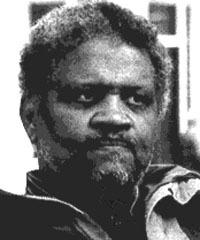
Ishmael Reed
Ishmael Reed

Ishmael Reed is an American poet, novelist, and playwright. Known for his unique literary style and profound exploration of racial, class, and gender issues, Reed was born on February 22, 1938. more

You May Also Like

“The areas in which I teach are working-class history and African-American Studies and at its best the critical study of whiteness often grows out of those areas. The critical examination of whiteness, academic and not, simply involves the effort to break through the illusion that whiteness is natural, biological, normal, and not crying out for explanation.”

“Instead of accepting what James Baldwin called the "lie of whiteness," many people in lots of different fields and movement activities have tried to productively make it into a problem. When did (some) people come to define themselves as white? In what conditions? How does the lie of whiteness get reproduced? What are its costs politically, morally and culturally?”

“As I wrote Working toward Whiteness, I came to see one historic task on the New Deal - and one in which it succeeded - as the fostering of fuller U.S. citizenship among immigrants from southern and eastern Europe and their kids. But this very achievement separated poorer and often despised immigrant workers from Europe and workers of color in unprecedented ways.”

“The New Deal never rethought the draconian racist immigration restriction policies of the 20s, of course, but its electoral base rested significantly on "ethnic" voters, whose activism was both hemmed in and rewarded by the Democrats. Southern and Eastern Europeans were included as secondary leaders of the new industrial unions, and as entitled citizens qualified for social security, unemployment compensation, and fair labor standards protections, even as workers of color were largely left out of key areas of the welfare state.”

“In some ways Jews and the various largely Catholic and often poor European immigrant groups were "white," as the historian Tom Guglielmo has recently put it, "on arrival." Where naturalization law was concerned, for example, ample precedents recognized their ability to become citizens, a right explicitly resting on their "whiteness." But they also remained, as Working toward Whiteness puts it, "on trial" for a harrowingly long time.”