Quotessence
Home / Quotes / Quote by Thomas Hardy

Quote by Thomas Hardy

Work

Selected poems

This book compiles a selection of poems that showcase the depth and diversity of the author's poetic voice, exploring a range of subjects and employing different literary techniques. more
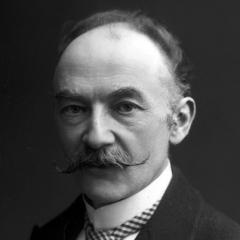
Author

Thomas Hardy
Thomas Hardy

Thomas Hardy, a British novelist born on June 2, 1840, and died on January 11, 1928, is renowned for his novels that depict rural life, reflecting the social changes in 19th-century England. His works often carry a sense of pessimism, depicting the fates of characters with sympathy. more

You May Also Like

“The only foundation of a free Constitution, is pure Virtue, and if this cannot be inspired into our People, in a great Measure, than they have it now. They may change their Rulers, and the forms of Government, but they will not obtain a lasting Liberty.”

“Liberty, according to my metaphysics, is an intellectual quality, an attribute that belongs not to fate nor chance. Neither possesses it, neither is capable of it. There is nothing moral or immoral in the idea of it. The definition of it is a self-determining power in an intellectual agent. It implies thought and choice and power; it can elect between objects, indifferent in point of morality, neither morally good nor morally evil.”

“The moment the idea is admitted into society that property is not as sacred as the law of God, and that there is not a force of law and public justice to protect it, anarchy and tyranny commence.”

“[You have Rights] antecedent to all earthly governments: Rights, that cannot be repealed or restrained by human laws; Rights, derived from the Great Legislator of the universe.”

“Were I to define the British constitution, therefore, I should say, it is a limited monarchy, or a mixture of the three forms of government commonly known in the schools, reserving as much of the monarchical splendor, the aristocratical independency, and the democratical freedom, as are necessary that each of these powers may have a control, both in legislation and execution, over the other two, for the preservation of the subject's liberty.”

“By Liberty I understand the Power which every Man has over his own Actions, and his Right to enjoy the Fruits of his Labour, Art, and Industry, as far as by it he hurts not the Society, or any Members of it, by taking from any Member, or by hindering him from enjoying what he himself enjoys. The Fruits of a Man's honest Industry are the just Rewards of it, ascertained to him by natural and eternal Equity, as is his Title to use them in the Manner which he thinks fit: And thus, with the above Limitations, every Man is sole Lord and Arbitrer of his own private Actions and Property.”