“Of those that spin out trifles and die without a memorial, many flatter themselves with high opinions of their own importance, and imagine that they are every day adding some improvement to human life.”
Quote by Samuel Johnson
Work
The Rambler: A Periodical Paper, Published in 1750, 1751, 1752
The Rambler is a series of periodical papers that were published in three separate volumes, spanning the years 1750, 1751, and 1752. Each volume consists of a variety of essays and articles, covering a range of topics including social issues, literature, and philosophy. The work is notable for its contribution to the development of the essay form and its influence on subsequent literary works. more
Author
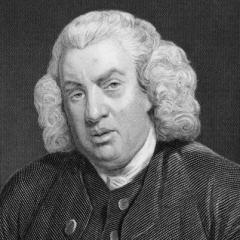
Samuel Johnson
Samuel Johnson was an English writer, poet, and lexicographer, renowned for his comprehensive English dictionary, 'A Dictionary of the English Language', published in 1755. His distinctive writing style and wit have cemented his place as a significant figure in the history of English literature. more
You May Also Like
Source: Rasselas, prince of Abyssinia
Source: Nietzsche: Philosopher, Psychologist, Antichrist
Source: On the Genealogy of Morals and Ecce Homo
“Great parts produce great vices as well as virtues.”
Source: Wit and Wisdom of Socrates, Plato, Aristotle: Being a Treasury of Thousands of Glorious, Inspiring and Imperishable Thoughts, Views and Observations of the Three Great Greek Philosophers, Classified Under about Four Hundred Subjects for Comparative Study