Quotessence
Home / Quotes / Quote by S. R. Ranganathan

Quote by S. R. Ranganathan

“A modern librarian, who has faith in the law that 'BOOKS ARE FOR USE,' is happy only when his readers make his shelves constantly empty. It is not the books that go out that worry him. It is the stay-at-home volumes that perplex and depress him.”

Quote by S. R. Ranganathan

Author
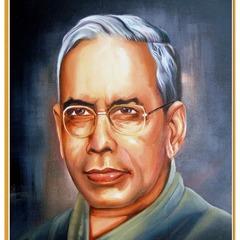
S. R. Ranganathan
S. R. Ranganathan

S. R. Ranganathan was an Indian mathematician known for his contributions to mathematics and library science. Born on August 9, 1892, and passing away on September 27, 1972, Ranganathan's work included research in number theory and algebra, as well as the development of the five laws of library science. more

You May Also Like

“The neuro-biology of playing a musical instrument is completely scientific, but it’s also an absolute miracle, that you’re taking basically a calcium bucket filled with salt-water that’s run by a weak electrical signal, and you’re using it to move your flesh around in order to manipulate an instrument which disturbs air molecules between you and the listener, and then the listener’s ears picks up those disturbed air molecules which generates a weak electrical signal to their calcium bucket full of salt water, and they feel a feeling. That’s miraculous, and that’s where I live.”

“GWEN is a superb system, in combination with cyclotron resonance, for producing behavioural alterations in the civilian population. The average strength of the steady geomagnetic field varies from place to place across the United States. Therefore, if one wished to resonate a specific ion in living things in a specific locality, one would require a specific frequency for that location. The spacing of GWEN transmitters 200 miles apart across the United States would allow such specific frequencies to be 'tailored' to the geomagnetic-field strength in each GWEN area.”

“Although people who had achieved a great deal in science and technology talked of the inscrutability of creativity, I was not convinced and disbelieved them immediately and without argument. Why should everything but creativity be open to scrutiny? What kind of process can this be which unlike all others is not subject to control?…What can be more alluring than the discovery of the nature of talented thought and converting this thinking from occasional and fleeting flashes into a powerful and controllable fire of knowledge.”