Quotessence
Home / Quotes / Quote by Thomas Watson

Quote by Thomas Watson

Author

Thomas Watson
Thomas Watson

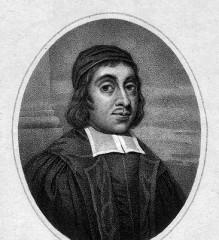
Thomas Watson (1620-1686), a renowned British author, is known for his profound humanistic concerns and unique literary style, which has had a profound impact on British literature. more

You May Also Like

“Pythagoras asks that we not let a friend go lightly, for whatever reason. Instead, we should stay with a friend as long as we can, until we're compelled to abandon him completely against our will. It's a serious thing to toss away money, but to cast aside a person is even more serious. Nothing in human life is more rarely found, nothing more dearly possessed. No loss is more chilling or more dangerous than that of a friend.”

“The only foundation of a free Constitution, is pure Virtue, and if this cannot be inspired into our People, in a great Measure, than they have it now. They may change their Rulers, and the forms of Government, but they will not obtain a lasting Liberty.”

“Liberty, according to my metaphysics, is an intellectual quality, an attribute that belongs not to fate nor chance. Neither possesses it, neither is capable of it. There is nothing moral or immoral in the idea of it. The definition of it is a self-determining power in an intellectual agent. It implies thought and choice and power; it can elect between objects, indifferent in point of morality, neither morally good nor morally evil.”

“The moment the idea is admitted into society that property is not as sacred as the law of God, and that there is not a force of law and public justice to protect it, anarchy and tyranny commence.”

“[You have Rights] antecedent to all earthly governments: Rights, that cannot be repealed or restrained by human laws; Rights, derived from the Great Legislator of the universe.”

“Were I to define the British constitution, therefore, I should say, it is a limited monarchy, or a mixture of the three forms of government commonly known in the schools, reserving as much of the monarchical splendor, the aristocratical independency, and the democratical freedom, as are necessary that each of these powers may have a control, both in legislation and execution, over the other two, for the preservation of the subject's liberty.”