“Very few of us can now place ourselves in the mental condition in which even such philosophers as the great Descartes were involved in the days before Newton had announced the true laws of the motion of bodies.”
Quote by James Clerk Maxwell
Work
Five of Maxwell's Papers: Easyread Comfort Edition
In this volume, readers will find a selection of James Clerk Maxwell's seminal papers that have shaped the understanding of electromagnetism. The Easyread Comfort Edition offers a readable presentation of these foundational texts, making them accessible to a broader audience interested in the history and principles of physics. more
Author
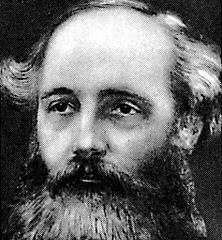
James Clerk Maxwell
James Clerk Maxwell was an outstanding physicist known for his contributions to the field of electromagnetism. He formulated Maxwell's equations, which describe the properties of electromagnetic fields and predict the existence of electromagnetic waves. Maxwell's work has had a profound impact on modern physics and engineering. more
You May Also Like
Source: A Long Line of Cells Collected Essays
Source: Our Knowledge of the External World as a Field for Scientific Method in Philosophy
Source: How to solve it: a new aspect of mathematical method
“[Apollo 7 was] an expedition of the mind, not of the heart.”
“Embrace in one act the two truths-thine own sin, and God's infinite mercy in Jesus Christ.”
Source: Sermons preached in Manchester