Quotessence
Home / Quotes / Quote by William Edward Hartpole Lecky

Quote by William Edward Hartpole Lecky

Work

History of the rise and influence of the spirit of rationalism in Europe

Comprehensive in scope, the book delves into the historical context of rationalism, its key figures, and its influence on various disciplines such as philosophy, science, and politics. It provides an in-depth analysis of the intellectual movements and debates that characterized the Enlightenment era, highlighting the contributions of rationalism to the advancement of human knowledge and societal progress. more

Author
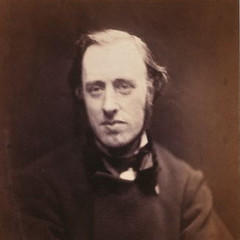
William Edward Hartpole Lecky

William Edward Hartpole Lecky was a British political figure and philosopher, known for his contributions to history and ethics, particularly in the fields of political thought history and moral philosophy. His works are extensive and cover European political thought from ancient Greece to the 19th century. more

You May Also Like

“[Middleton] contended that the religious leaders of the fourth century had admitted, eulogised, and habitually acted upon principles that were diametrically opposed, not simply to the aspirations of a transcendent sanctity, but to the dictates of the most common honesty. He showed that they had applauded falsehood, that they had practised the most wholesale forgery, that they had habitually and grossly falsified history, that they had adopted to the fullest extent the system of pious frauds, and that they continually employed them to stimulate the devotion of the people.”

“All over Europe the organs that represent dogmatic interests are in permanent opposition to the progressive tendencies around them, and are rapidly sinking into contempt. In every country in which a strong political life is manifested, the secularisation of politics is the consequence. Each stage of that movement has been initiated and effected by those who are most indifferent to dogmatic theology, and each has been opposed by those who are most occupied with theology.”

“On the Continent, every attempt to substitute a lighter punishment for death was fiercely denounced as a direct violation of the Divine law. Indeed, some persons went so far as to question the lawfulness of strangling the witch before she was burnt. Her crime, they said, was treason against the Almighty, and therefore to punish it by any but the most agonizing deaths was an act of disrespect to Him. Besides, the penalty in the Levitical code was stoning, and stoning had been pronounced by the Jewish theologians to be a still more painful death than the stake.”

“If there is no military need for the building, leave it alone, neither putting anyone in or out of it, except on finding some one preaching or practicing treason, in which case lay hands on him, just as if he were doing the same thing in any other building.”

“There was the strangest combination of church influence against me. Baker is a Campbellite; and therefore, as I suppose with few exceptions, got all of that Church. My wife had some relations in the Presbyterian churches, and some in the Episcopal churches; and therefore, wherever it would tell, I was set down as either one or the other, while it was everywhere contended that no Christian ought to vote for me because I belonged to no Church, and was suspected of being a Deist and had talked of fighting a duel.”

“I have neither time nor disposition to enter into discussion with the Friend, and end this occasion by suggesting for her consideration the question whether, if it be true that the Lord has appointed me to do the work she has indicated, it is not probable that he would have communicated knowledge of the fact to me as well as to her.”