Quotessence
Home / Quotes / Quote by Michel de Montaigne

Quote by Michel de Montaigne

Work

The Complete Works: Essays, Travel Journal, Letters

This book is a compilation of essays, travel journal entries, and letters, offering a diverse range of perspectives and experiences from different authors. more

Author
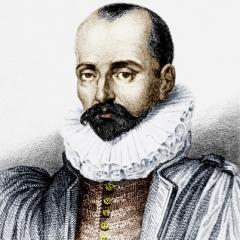
Michel de Montaigne
Michel de Montaigne

Michel de Montaigne was a French Renaissance philosopher, essayist, and writer. He is considered one of the most significant figures in the history of the essay. Montaigne's work, particularly his book 'Essays', has been influential in the development of modern prose. more

You May Also Like

“How much reverence has a noble man for his enemies!--and such reverence is a bridge to love.--For he desires his enemy for himself, as his mark of distinction; he can endure no other enemy than one in whom there is nothing to despise and very much to honor! In contrast to this, picture "the enemy" as the man of ressentiment conceives him--and here precisely is his deed, his creation: he has conceived "the evil enemy," "the Evil One," and this in fact is his basic concept, from which he then evolves, as an afterthought and pendant, a "good one"--himself!”

“Free will appears unfettered, deliberate; it is boundlessly free, wandering, the spirit. But fate is a necessity; unless we believe that world history is a dream-error, the unspeakable sorrows of mankind fantasies, and that we ourselves are but the toys of our fantasies. Fate is the boundless force of opposition against free will. Free will without fate is just as unthinkable as spirit without reality, good without evil. Only antithesis creates the quality.”

“More and more it seems to me that the philosopher, being of necessity a man of tomorrow and the day after tomorrow, has always found himself, and had to find himself, in contradiction to his today: his enemy was ever the ideal of today. So far all these extraordinary furtherers of men whom one calls philosophers, though they themselves have rarely felt like friends of wisdom but rather like disagreeable fools and dangerous question marks, have found their task, their hard, unwanted, inescapable task, but eventually also the greatness of their task, in being the bad conscience of their time.”