Quotessence
Home / Quotes / Quote by Jorge Luis Borges

Quote by Jorge Luis Borges

“In that Empire, the Art of Cartography attained such Perfection that the map of a single Province occupied the entirety of a City, and the map of the Empire, the entirety of a Province. In time, those Unconscionable Maps no longer satisfied, and the Cartographers Guilds struck a Map of the Empire whose size was that of the Empire, and which coincided point for point with it. The following Generations, who were not so fond of the Study of Cartography as their Forebears had been, saw that that vast map was Useless, and not without some Pitilessness was it, that they delivered it up to the Inclemencies of Sun and Winters. In the Deserts of the West, still today, there are Tattered Ruins of that Map, inhabited by Animals and Beggars; in all the Land there is no other Relic of the Disciplines of Geography. Suárez Miranda, Viajes de varones prudentes, Libro IV, Cap. XLV, Lérida, 1658”

Quote by Jorge Luis Borges

Author
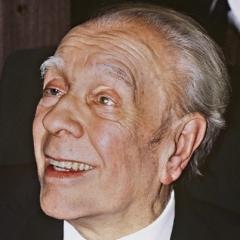
Jorge Luis Borges
Jorge Luis Borges

Jorge Luis Borges was an Argentine writer, poet, and literary critic. His works are known for their unique fantasy and philosophical thinking, which have had a profound impact on 20th-century literature. more

You May Also Like

“Every history is a map: it leaves out some features of reality, and singles out others which are thought to display its essential structure. When a historical map is drawn, as ours is, from specific groups outward, it has a special character. The process of mapping becomes the surveyor's process of triangulation, and the reference points are important less in themselves than as marks for triangulation-that is, as points from which to take a bearing. This is the principle which has guided us whenever we have had to make a choice between men; which of them, we have asked, best expresses the essence of his time.”

“If we impose on a map of the earth a 'world grid' with Giza (not Greenwich) as its prime meridian, then hidden relationships become immediately apparent between sites that previously seemed to be on a random, unrelated longitudes. On such a grid, as we've just seen, Tiruvannamalai stands on longitude 48 degrees east, Angkor stands on longitude 72 degrees east and Sao Pa stands out like a sore thumb on longitude 90 degrees east -- all numbers that are significant in ancient myths, significant in astronomy (through the study of precession), and closely interrelated through the base-3 system. So the 'outrageous hypothesis' which is being proposed here is that the world was mapped repeatedly over a long period at the end of the Ice Age -- to the standards of accuracy that would not again be achieved until the end of the eighteenth century. It is proposed that the same people who made the maps also established their grid materially, on the ground, by consecrating a physical network of sites around the world on longitudes that were significant to them. And it is proposed that this happened a very long time ago, before history began, but that later cultures put new monuments on top of the ancient sites which they continued to venerate as sacred, perhaps also inheriting some of the knowledge and religious ideas of the original navigators and builders.”

“Columbus’s fateful voyage was inspired by his study of a map by Paolo Toscanelli. But there was also the 1854 cholera outbreak in London, which killed hundreds of people until a physician, John Snow, drew a map demonstrating that a single contaminated water pump was the source of the illness, thereby founding the science of epidemiology. There was the 1944 invasion at Normandy, which succeeded only because of the unheralded contribution of mapmakers who had stolen across the English Channel by night for months before D-Day and mapped the French beaches.* Even the moon landing was a product of mapping. In 1961, the United States Geological Survey founded a Branch of Astrogeology, which spent a decade painstakingly assembling moon maps to plan the Apollo missions. The Apollo 11 crew pored over pouches of those maps as their capsule approached the lunar surface, much as Columbus did during his voyage. It seems that the greatest achievements in human history have all been made possible by the science of cartography.”

“Even if we admit that running-survey and compass techniques were somehow being used on ships to produce sea-charts as early as the thirteenth century (which most historians of science would rule out) we still come against the unexplained enigma of the miraculous and fully formed de novo appearance of the Carta Pisane. As we've seen, not a single chart pre-dates it that demonstrates in any way the gradual build-up of coastal profiles across the whole extent of the Mediterranean that must have occurred before a likeness as perfect as this could have been resolved. It is possible, of course, through the vicissitudes of history, that all the evidence for the prior evolution of portolans before the Carta Pisane has simply been lost. If that were the case, however -- in other words if the Carta Pisane is a snapshot of a certain moment in the development of an evolving genre of maps, and if we accept that all earlier 'snap-shots' have been lost, wouldn't we nevertheless expect that such an 'evolving genre' would have continued to evolve after the date of the earliest surviving example? Whether we set the date of the Pisane between 1270 and 1290 [...] or a little later -- between 1295 and 1300 -- as other scholars have argued, we've seen that there was no significant evolution afterwards. Now kept in the Bibliothèque Nationale in Paris, the enigmatic Pisane is an unsigned chart and scholars have no idea who the cartographer might have been.”

“If the normal portolano is indeed derived from the lost atlas of Marinus of Tyre, then it follows that other high-quality maps of regions much further afield than the Mediterranean and the Black Sea, and indeed a world map, might also have been preserved by the Arabs -- for we know from Ptolemy's testimony that other Marinus maps, including a world map, did once exist. It will therefore do no harm to keep an open mind to the possibility that the portolan world maps that began to appear during the century after the Carta Pisane, might also have been influenced by earlier 'Tyrian sea-fish' maps of Phoenician origin. Christopher Columbus, whose passionate belief in lands across the Atlantic lead to his 'discovery' of the New World, seems to hint at a Phoenician connection when he describes one of the inspirations for his journey: 'Aristotle in his book On Marvellous Things reports a story that some Carthaginian merchants sailed over the Ocean Sea to a very fertile island ... this island some Portuguese showed me on their charts under the name Antilia.' Antilia first appears on a portolan chart of 1424. It is a mysterious presence there, a riddle.”

“Though [Marco] Polo himself states frankly that he has never visited Japan -- and thus that what he has to say about it is second-hand and perhaps inaccurate -- the notion of the mysterious island kingdom of Cipango that he planted in European consciousness at the end of the thirteenth century was later one of several powerful influences that spurred Christopher Columbus forward in his crossings of the Atlantic at the end of the fifteenth century. This was so because Columbus -- underestimating the circumference of the earth and knowing nothing of the existence of the Americas or of the Pacific Ocean -- believed that he could reach Cipango, and thence the Chinese mainland beyond, by sailing directly westwards across the Atlantic from Europe. Columbus is also likely to have calculated that Cipango would be reached after only a relatively short journey towards the west -- for he had read Marco Polo, who describes Cipango, erroneously, as lying 'far out to sea' fully 1500 miles to the east of the Chinese mainland (the true distance is nowhere much more than 500 miles).”

“1. Ceylon was believed by Marco Polo to have been one-third larger in the past than it had become by his day -- with extensive lands to the north of the present island said to have been 'submerged under the sea'. In the process its circumference was reduced in size from 3600 units of measurement to 2400 units of measurement, i.e. by one-third. 2. Maps were in use amongst mariners in the Indian Ocean when Marco Polo was there -- either mappamundi or mariners' charts depending on the translation -- which continued to show the one-third larger, antediluvian Ceylon. On the first of the two points above -- the one-third reduction in the size of Sri Lanka by flooding -- we cannot deny, having studied the inundation history of south India and Sri Lanka in earlier chapters, that the tradition which Marco Polo here preserves and passes down to us is essentially correct when set within the time-frame of the end of the last Ice Age. Since approximately 7700-6900 years ago, when the last remnants of its landbridge to south India were inundated, Glenn Milne's maps suggest that there have been no significant changes in Ceylon's size. Prior to 7700 years ago the picture is very different, and as we go back through 8900 years ago, 10,600 years ago, 12,400 years ago, and 13,500 years ago, we note a progressive enlargement of Sri Lanka, exclusively in the north around the landbridge to south India, resulting from the lowered sea-level of those epochs. At its greatest extent the enlargement is of the order of one-third.”

“Traditions, with all their folksy redolences, are relatively safe matters for scholars to speculate about. Maps and nautical charts on the other hand -- especially accurate, sophisticated maps of the kind used by Guzarate to chart Vasco da Gama's course from Malindi to Calicut in 1498 -- are quite another matter. If maps have indeed come down to us containing recognizable representations of Ice Age topography -- as arguably may be the case with the depictions of India and of the long-submerged Sundaland peninsula by Cantino and Reinal and with the depiction of the 'Golden Chersonese' by Ptolemy -- then prehistory cannot be as it has hitherto been presented to us. If they are what they seem, such maps mean a lost civilization. Nothing more. Nothing less.”