Quotessence
Home / Quotes / Quote by Thomas Jefferson

Quote by Thomas Jefferson

“It should be our endeavor to cultivate the peace and friendship of every nation . . . . Our interest will be to throw open the doors of commerce, and to knock off all its shackles, giving perfect freedom to all persons for the vent to whatever they may choose to bring into our ports, and asking the same in theirs.”

Quote by Thomas Jefferson

Work

Notes on the State of Virginia

Written by Thomas Jefferson, this seminal work provides insights into the early American colonies and explores themes of government, society, and race relations. more

Author
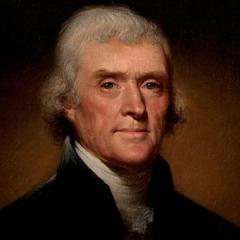
Thomas Jefferson
Thomas Jefferson

Thomas Jefferson was the third President of the United States, a distinguished politician, philosopher, architect, and scientist. He was born on April 13, 1743, and died on July 4, 1826. Jefferson advocated for democracy and freedom in politics and was one of the main authors of the Declaration of Independence. His political ideas had a profound impact on the founding and development of the United States. more

You May Also Like

“I own myself the friend to a very free system of commerce, and hold it as a truth, that commercial shackles are generally unjust, oppressive and impolitic - it is also a truth, that if industry and labour are left to take their own course, they will generally be directed to those objects which are the most productive, and this in a more certain and direct manner than the wisdom of the most enlightened legislature could point out.”

“The defect of power in the existing confederacy, to regulate the commerce between its several members is in the number of those which have been clearly pointed out by experience . . . . A very material object of this power was the relief of the States which import and export through other States from the improper contributions levied on them by the latter.”

“The Spirit of Enterprise, which characterizes the commercial part of America, has left no occasion of displaying itself unimproved. It is not at all probable that this unbridled spirit would pay much respect to those regulations of trade by which particular States might endeavor to secure exclusive benefits to their own citizens.”

“There are still to be found visionary or designing men, who stand ready to advocate the paradox of perpetual peace between the states, though dismembered and alienated from each other.... The genius of republics, say they, is pacific; the spirit of commerce has a tendency to soften the manners of men, and to extinguish those inflammable humours which have so often kindled into wars. Commercial republics, like ours, will never be disposed to waste themselves in ruinous contentions with each other. They will be governed by mutual interest, and will cultivate a spirit of mutual amity and concord.”

“Passive commerce . . . should thus . . . [compel us] to content ourselves with the first price of our commodities, and to see the profits of our trade snatched from us, to enrich our enemies and persecutors. That unequalled spirit of enterprise . . . an inexhaustible mine of national wealth, would be stifled and lost; and poverty and disgrace would overspread a country, which, with wisdom, might make herself the admiration and envy of the world.”

“By multiplying the means of gratification, by promoting the introduction and circulation of the precious metals, those darling objects of human avarice and enterprise, it serves to vivify and invigorate the channels of industry, and to make them flow with greater activity and copiousness. The assiduous merchant, the laborious husbandman, the active mechanic, and the industrious manufacturer,-all orders of men, look forward with eager expectation and growing alacrity to this pleasing reward of their toils.”

“To cherish and stimulate the activity of the human mind, by multiplying the objects of enterprise, is not among the least considerable of the expedients, by which the wealth of a nation may be promoted. Even things in themselves not positively advantageous, sometimes become so, by their tendency to provoke exertion. Every new scene, which is opened to the busy nature of man to rouse and exert itself, is the addition of a new energy to the general stock of effort.”

“The inducements of interest for observing [neutral] conduct . . . has been to endeavour to gain time to our country to settle and mature its yet recent institutions, and to progress without interruption, to that degree of strength and consistency, which is necessary to give it, humanly speaking, the command of its own fortunes.”