“Passive commerce . . . should thus . . . [compel us] to content ourselves with the first price of our commodities, and to see the profits of our trade snatched from us, to enrich our enemies and persecutors. That unequalled spirit of enterprise . . . an inexhaustible mine of national wealth, would be stifled and lost; and poverty and disgrace would overspread a country, which, with wisdom, might make herself the admiration and envy of the world.”
Quote by Alexander Hamilton
Work
The Federalist, on the New Constitution
Written by Alexander Hamilton, James Madison, and John Jay, this collection of essays provides a comprehensive defense of the proposed Constitution. It delves into the rationale behind the structure of the federal government, the balance of power among its branches, and the importance of federalism. The Federalist Papers are considered essential reading for understanding the philosophical underpinnings of the American political system. more
Author
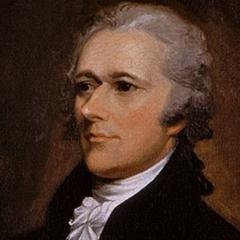
Alexander Hamilton
Alexander Hamilton was a Founding Father of the United States, born on January 11, 1757, and died on July 12, 1804. He played a crucial role in the American Revolutionary War and was instrumental in the drafting of the U.S. Constitution. As the first Secretary of the Treasury, Hamilton promoted fiscal stability and economic growth, establishing the First Bank of the United States and proposing solutions for federal debt. His ideas and policies had a profound impact on the early political and economic development of the United States. more
You May Also Like
Source: Letters and Other Writings of James Madison
Source: The Federalist Papers: A Collection of Essays Written in Favour of the New Constitution
Source: Report of the Secretary of the Treasury of the United States, on the Subject of Manufactures: Presented to the House of Representatives, December 5, 1791
Source: The Complete Works of George Washington: Military Journals, Rules of Civility, Writings on French and Indian War, Presidential Work, Inaugural Addresses, Messages to Congress, Letters & Biography
Source: Report of the Secretary of the Treasury of the United States, on the Subject of Manufactures: Presented to the House of Representatives, December 5, 1791
Source: The quotable Ronald Reagan: the common sense and straight talk of former California Governor, Ronald Reagan
Source: The quotable Ronald Reagan: the common sense and straight talk of former California Governor, Ronald Reagan
“Be in general virtuous, and you will be happy.”
Source: Works of the late Dr. Benjamin Franklin: consisting of his life, written by himself : together with essays, humourous, moral & literary, chiefly in the manner of the Spectator : in two volumes
Source: The portable Thomas Jefferson